

2008 – Iceland
International project to Iceland
Across the open sea—MerikarviaFrom there to the Fairy Tale Island is MerikarviaA joint international project between junior high school and high school in the 2007-2008 academic year. MerikarviaThe focus of middle and high school is internationality, and it is natural that the schools have a long history of implementing international projects.
The project for the 2007-2008 academic year is focused on Iceland. 40 pupils and students and 5 supervisors are participating in the project. During the project, the students have written articles about Icelandic culture, history, nature and livelihoods.
The project will culminate in a trip to Iceland in April 2008, during which we will explore local attractions, culture and visit our partner school. Fjölbrautaskoli in Sudurnesja.
The page is updated regularly with new articles and blog entries, as well as information about our travel program.
Our project has been supported by many parties. Thank you all!
Useful links
- Fjölbrautaskoli Sudurnesja
- Reykjavik City
- Reykjavik City Tourism Website
- Whale watching Reykjavik
- Saga Museum
- Blue Lagoon
- Icelandic horse farm
- Reykjavik Restaurant
- Pizzeria Rossopomodoro
- Fosshotel Baron
Projects
A key part of participating in the project is research work carried out by pupils and students on the Icelandic language, culture, history, nature and geography. Articles completed in the upper secondary science thesis course and the upper secondary school thesis course can be found at the following links.
Aho, Markus. Icelandic industry
Icelandic industry
Iceland's economy and population are growing faster than other Nordic countries. Economic growth has been twice as fast as in the euro area for ten years. The standard of living is higher than in Finland, Sweden or Germany, and this is reflected, among other things, in the high consumption of luxury goods. Iceland's unemployment rate is very low. Iceland's high standard of living is easily visible in the capital region, where you can see many expensive SUVs and fashion-conscious people spending the evening in expensive trendy restaurants. The majority of consumer goods and machinery are imported from abroad, as the country has very little domestic industry. 70 percent of Iceland's exports are from the fishing industry, although the sector employs only 10 percent.
Energy
Energy is abundant in Iceland and cheap. Iceland gets most of its energy (84%) from hydropower and the rest (16%) from geothermal heat. The vast majority (85%) of buildings in Iceland are heated using geothermal heat. Iceland makes the most use of geothermal heat among the Nordic countries due to its volcanic soil. It can also be used for energy production.
Geothermal heat cannot be utilized in Finland because the Finnish soil is not volcanic. Geothermal heat is generated when radioactive substances decay in the Earth's crust or mantle, and it is usually bound in hot water or steam. The most important areas containing geothermal heat are Torvajökull, a glacier east of Hekla, and Grímsvötn, a lake on the Vatnajökull glacier. Next in order of magnitude is the Hengill area, from which the hot water needed to heat Reykjavík is taken. The sulfur found in some hot water areas can be utilized in industry. Hydropower is, at least for now, the most important energy source for Iceland. There, rivers flowing from glaciers are efficiently utilized. An alternative form of energy for Iceland is methanol. Methanol would be obtained from carbon emissions and hydrogen from aluminum factories.
Aluminum industry
The Icelandic aluminum industry is growing rapidly, and the aluminum industry is a good fit for Iceland because of its high energy needs. Foreign aluminum companies want to sign contracts with Iceland for three new giant plants. If they are built, Iceland's aluminum production will increase to four percent of the world's total production. However, there is a big fight over the aluminum industry because environmentalists do not want to "destroy" Iceland's nature with heavy metal factories. They have fought a lot against the construction.
One new aluminium plant is planned to be built in Helguvík, near Keflavík International Airport, and one in northern Iceland. At the same time, there are plans to expand the Norðurál aluminium plant, located in Grundartang on the shores of the Hvalfjord fjord north of Reykjavik. The same applies to the Alcan plant, located in Straumsvík, near Reykjavik. Other important industrial sectors are energy, biotechnology and programming. The computer or ICT sector is indeed booming in Iceland.
Sources:
http://www.iceland.org/fi/suurlahetysto/tietoa-islannista/talous/
http://www.analysnorden.org/analysnorden/artikkel.asp?id=379
http://www.peda.net/verkkolehti/ee/82/mantsalariihimaen?m=content&a_id=21
Aulamo, Lotta. Iceland as a Film Country
Icelandic cinema has a surprisingly long history. The country's own film production began as early as 1920, when Iceland filmed The story of the Borg family –movie called (History of the Borgslægten)The wildness and beauty of Icelandic nature has inspired filmmakers from around the world.
The journey of contemporary Icelandic cinema to the world
Icelandic cinema has only become internationally known since 1980. Most Icelandic films are primarily designed for Icelanders and only then for the rest of the world. Few films are simply attempts to copy American mainstream cinema and Hollywood's multi-million dollar budgets. Perhaps that is why Icelandic cinema has begun to attract audiences around the world at various film festivals. It seems that the situation between Icelandic and Finnish cinema is similar.
Among current filmmakers in Europe and the Nordic countries, Fridrik Thor Fridriksson is known, among others, who has visited the Rauma Film Festival and whose film has won several awards and been nominated for an Oscar. Children of Nature has also been shown on Finnish television. The same director Angels of the Universe The film's lead role was played by the currently most internationally acclaimed Icelandic actor, Ingvar E. Sigurðsson. Ingvar has been nominated for both the European Actor 2000 Award and the Icelandic Edda Award.
Another Icelander who has gained international recognition for his films is Hrafn Gunnlaugsson, who directed the spectacular Viking trilogy set in ancient Iceland and Scandinavia. In addition to period films, Gunnlaugsson has also made films set in the present day. A good example is the 2003 film that is best known to Finns. Hannesar of Opinberu (Hannes' revelation)It is a Kafkaesque story about Hannes, who works at the State Audit Office, who loses his identity along with his computer.
Hrafn Gunnlaugsson is considered authoras a director. Author– the director acts as an independent and powerful artist in his films, whose work is distinguished by the director's personal and individual mark. Among Finnish directors, Aki Kaurismäki is one such director. He writes, directs, produces and sometimes even edits his own films.
Edda Award and ÍKSA
The Edda Award means the same to Icelanders as the Jussi Gala does to us Finns. The Edda Awards annually award the best Icelandic feature film and short film, documentaries and music videos, best male and female leads and best directors. The awards are presented by ÍKSA, The Icelandic Film and Television Academy, which was founded in 1999, when the first Edda Awards were also presented. The Edda Award is extremely popular in Iceland, watched annually by up to 60% of the entire population. It is interesting to note that the name of the award is derived from Icelandic (Scandinavian) mythology.
New Generation – Dagur Karí
One of the Edda winners is Dagur Kari, a director born in Paris but who has lived in Iceland for most of his life. The thirty-four-year-old director's creativity may have run in his family, as his father is the famous Icelandic writer, Pétur Gunnarsson. Karí received his film education at the Danish National Film School in Copenhagen, from which he graduated in 1999. Perhaps it is because of his Danish education that Karí has also been involved in the dogma film movement that began in Denmark. (Dogma film is an artistic movement that focuses on the purest possible aspects of the film and only on the essentials.)
Dagur Karí's first and most famous feature film was Noi Albinoi (2003), which was a great success both in Iceland and abroad. The debut won a total of 20 film awards around the world. In addition to directing, Karí also composed the music for the film together with his band called Slowblown. In addition to him, the orchestra includes another Icelander, Orri Jónsson. Even before Noí's story, Karí had worked on music videos and made an award-winning short film as his final project in film school Lost Weekend. He is currently working on The Good Heart a film starring musician Tom Waits.
Noí Albínoí – stories from a cold land
The film Noí Albínoí is a tragicomic, yet warm-hearted story about the life, thoughts and hopes of a young man named Noí. Noí lives with his grandmother and father in a small, snowy and remote Icelandic village, next to an old volcano. Noí is completely bored with school, even though a psychiatrist who visited the school has stated that Noí is even intelligently prodigious. However, this does not interest the young man and he is eventually expelled from school when, as a last-ditch trick, he brings a cassette recorder to class as a “substitute”.
One day, Noí meets a beautiful girl at a gas station, the daughter of a familiar bookseller, Íris. Noí falls in love and dreams of running away with Íris to warmer countries, away from the cold and remote Iceland. At the same time, he tries to get along with his alcoholic, disappointed, but kind father. Noí's grandmother seeks help from the local fortune teller Gylf and asks him to guide Noí into the right field, because "the boy is not academic at all."
Gylfi agrees, but unfortunately the prophecy contains nothing out of the ordinary. Noí's prophecy is full of death. Noí doesn't want to believe this, so she escapes into her tropical dreams in her own secret hideaway in the old basement of the house.
Although Noí's life may sound bleak and uninspiring, it is not entirely so. The inhabitants of the small village are reasonable and peaceful people, and they often treat Noí with great kindness and understanding, even if she herself does not always notice it. Noí does not have it easy, but she is not oppressed either.
The end of the film actually begins when Noí hears his fateful prophecy. He becomes nervous and terribly scared, which results in him quitting his new job as a gravedigger and going to rob a local bank. The robbery is unsuccessful, as Noí is fortunately not taken seriously. In the end, he withdraws all his money, buys a new suit, steals a car and goes to ask Íris to run away with him to Hawaii, as planned. However, Íris refuses to go with him and Noí has to sleep in a cage that night. When he returns home, Noí locks himself in his underground hideout, even more depressed. However, fate intervenes when a large avalanche buries Noí's home and the boy is trapped in the basement. He is rescued, but it soon dawns on him what has really happened. All of Noí's loved ones, his grandmother and father, Íris and her father, Noí's friend and many others, are dead and Noí is left all alone. A peaceful film has a shocking ending that the viewer did not expect.
The film is a beautiful and melancholic story that amazes and holds the viewer in its grip with good characters, plot and beautiful surroundings. The film exudes a "Kaurismäki-ness" that a Finn might recognize. Noí Albínoí is a thrilling cinematic experience just as it is, without a single second of violence or added effects.
Sources:
Website of the Embassy of Iceland in Helsinki
http://www.iceland.org/fi/suurlahetysto/tietoa-islannista/kulttuuri/elokuva/
Icelandic Film Centre website
http://icelandicfilmcentre.is/
ÍKSA and Edda award
http://icelandicfilmcentre.is/Icelandic-Films/edda-awards/
Hrafn Gunnlaugsson: Wikipedia, the free encyclopedia
http://fi.wikipedia.org/wiki/Hrafn_Gunnlaugsson
Dagur Karí: Internet Movie Database
http://www.imdb.com
Wikipedia the free encyclopedia
Danakas, Linda. Geysers
GEYSERS
What is a geyser and how were they created?
A geyser is a hot spring that erupts hot steam at regular intervals. Geysers were created by a crack in the earth's crust, either as a result of volcanoes or earthquakes, from which water rushes out as it is heated by the earth. Springs can continue to form because the Icelandic soil is constantly moving, shaping and renewing itself. Old geysers may stop working, dry up and new springs may appear in some. Changes are constantly taking place under the earth's crust that affect the movement of groundwater. There are currently about 700-1500 geysers, depending on whether the smallest springs are included.
How warm is the water in the springs, where does it come from?
The water in the geysers is on average 70¤c. The water flowing into the cavity is heated by the volcanic heat at the bottom of the cavity. Due to the water pressure, the water overheats, meaning the temperature rises to over 100 degrees and eventually the water starts to boil.
What influences the eruption of springs and how does it happen?
Geysers have been more active as a result of earthquakes or volcanoes. As a result, a crack forms in the earth's crust, which must have a passage through which the water can escape. When the underground cavity begins to fill and it is close enough to the hot parts of the earth, the water begins to evaporate at the bottom of the cavity. Due to the buoyancy, the water erupts upwards with a loud roar. First, steam comes out of the opening, after which the scalding hot water sprays upwards. After the eruption, the pressure in the cavity drops and therefore the spraying stops until the cavity fills with water again and evaporates.
Stages of discharge:
- A) Groundwater fills cavities, i.e. an endogenous process occurs. A phenomenon that occurs beneath the earth's crust.
B) Magma/magmatic gases heat the groundwater. (Magma = lava erupting from a volcano.) Water vapor is formed. As a result, some of the water in the channel erupts out as a water column.
C) Some of the released water flows back into the basin and at the same time new, colder groundwater flows into the cavities and refills them. After this, the event can repeat.
Why do geysers erupt at certain intervals?
For example, in the United States, Old Faithful erupts on average every 90 minutes, but the range is roughly half an hour to over two hours. The more violent the eruption, the longer it takes before it erupts again.
What size are the hot springs?
They are of different sizes. For example, the Great Geysir (which is currently inactive). Its basin is 18 meters wide and 1.3 meters deep. The pipe coming out of the bottom of the basin is 20 meters long, which is 3 m wide.
How are sources utilized and are they harmful?
They are used as energy sources for greenhouses and district heating. (For vegetables, fruits & flowers). Also in outdoor swimming pools, which Icelanders are used to visiting many times a week. The water contains a lot of minerals that must be purified before being connected to the hot water network. The water produced after the purification process can be used for health bathing and is said to help with e.g. skin diseases. There is also evidence of health effects. The sulfur found in some hot water areas can be utilized in industry. The springs are not harmful, but the sulfur smell can be quite strong near the springs, which can be a bit nauseating.
Are hot springs and geysers the same thing and what does the word geyser mean?
Yes, it is. A geyser is a spring that shoots up to several meters high. After all, all other springs are named after the old geyser.
The most famous geysers?
The most famous geysers are the Great Geysir in Iceland & Old Faithful in Yellowstone. The Great Geysir is located 90km northeast of Reykjavik & erupts every 80-90 minutes, with a water column height of 30-35m & every 24-30 hours a larger eruption occurs, with a height of up to 70 meters. Old Faithful is one of the most famous geysers in the world. It is located in Yellowstone National Park. 14-000 liters of boiling water erupts from the source, to a height of 32-000 meters, for 30-55 minutes and every 1,5-5 minutes. Tourists can watch the eruptions.
Harry Woodward calculated a mathematical relationship between eruption dates in 1938. Steamboat Geyser, located in the park, is larger than Old Faithful, but erupts more irregularly. Because of its regularity, Old Faithful is one of Yellowstone's biggest attractions.
The word geysir means an untapped or unharnessed jet in Finnish, but Gummerus's Icelandic Dictionary claims it means "that which sprays".
Sources:
Geyser releases pressure. Science Illustrated 15/2002, page 11.
http://www.tieteenkuvalehti.com/Crosslink.jsp?d=157&a=1219&id=7875_8
Hot springs. Peda.net. Iceland project
http://www.peda.net/en/magazine/ee/82/riihimakkee?m=content&s_id=14
Geysir
http://www.feinix.fi
Haapala, Jenni. Delicacies from the island of fairy tales, Iceland
DELICIOUS DElicacies from the Fairytale Island of Iceland
Iceland is a modern country in our modern world, although it is really important for citizens to preserve their own traditions and perhaps most importantly their own traditional dishes. Hunger does not come as a surprise in Iceland, because whether it is cold or hot, a summer day with a temperature of fifteen degrees Celsius or a frosty day with a temperature of minus 38 degrees Celsius, the food is always delicious. There are many exotic things to try, ranging from sheep's heads to perhaps even the even more special rotten shark meat. Would you like it? It may not sound very pleasant and getting used to Icelandic food takes time. Without these many and special food traditions, Iceland would not be quite itself, although traditions sometimes get lost in the Thousand Islands sauce. Cooking is important to many families in Iceland, many of them eat together every day, around seven in the evening.
Matvis, an Icelandic association for those working in food production and the restaurant industry, in addition to its association activities, does a lot of work to ensure that Iceland has a diverse and culturally rich food supply. The association's activities also include organizing training.
Fish, straight from the Atlantic
Icelandic export trade gives other countries the opportunity to taste “food straight from nature”, as the marketing slogan says. Fresh ingredients of high quality, for people who demand luxury. Fish and fish products are the most important export products in Iceland, Iceland is known as the land of fish. Fish is caught within 200 nautical miles of territorial waters and up to 95% of the fish catch ends up on the tables of people other than Icelanders. The most important fish are cod (of course, although Icelanders are not very fond of it). Ling, haddock, which is perhaps the most popular among Icelanders; served at family dinners, as a snack for children and almost any other way. Also important are saithe, shark, redfish and various flounders. Freshwater fish are trout and salmon, which are often offered when a finer dish is desired. And who has not heard of Icelandic herring. Seal and whale, on the other hand, are slightly rarer seafood. At least you won't find any raw material from the sea that even someone wouldn't like. Everything edible is used from fish, meat and innards, although the bones may be a bit of a turn-off in the throat. The use of shellfish in Iceland is less, but lobster is a particularly popular delicacy among the "high society". Mussels can also be found on the menu of many restaurants. Icelanders usually eat fish about twice a week. However, fish is not every Icelander's favorite food.
Here is one example of Icelandic fish dishes and as you can see, the preparation methods are not all that complicated, but the food is still mouthwatering according to those who have tasted it.
Gratinerud ysuflök and horseradish sauce
Horseradish-flavored cala gratin
500 g cooked boneless fish fillet, e.g. haddock
4 tablespoons of butter
4 tablespoon of wheat flour
2 dl fish stock
2dl of drinking milk
salt and pepper
100g fresh cheese
2-3 tablespoons of grated horseradish
2 eggs
breadcrumbs
Cut the fish into bite-sized pieces. Make a thick sauce from butter, wheat flour, fish stock and milk, season with salt and pepper. Add the cheese and horseradish and stir until the cheese has melted. Separate the egg yolks and whites, mix the yolks into the sauce and fold in the fish pieces. Beat the whites until stiff and fold in. Pour the mixture into a greased baking dish and sprinkle with breadcrumbs. Gratinate the food in a 200 degree oven until firm and golden, approx. 30 minutes. Serve the cala gratin with toast and butter.
From agriculture and meat products, maybe also vegetables
Agricultural products, meat and cheese are also exported from Iceland to the world. The meat dishes served are mostly lamb and lamb, of which almost all are used, of course not the wool or all the internal organs. However, testicles and brains are traditional Icelandic delicacies. The testicles are put in a net, boiled and put under pressure in sour whey for three months. However, it is less often prepared at home, mostly in restaurants. Lamb meat is only dried, completely dry or semi-dry, while lamb heads and hooves are boiled and roasted. Christmas stew is also made from lamb, its head meat. Cattle are served less in Iceland, the meat from small cattle is in any case first-class. Pork is not used very much either and for religious reasons horse meat is not eaten either. The menu also serves reindeer, various birds and even chicken to some extent. Icelanders raise almost all domesticated birds found in the Nordic countries, and bird food is prepared in the same way as elsewhere. Vegetables and other greens are mostly imported.
Tastings from the dessert table
Desserts and pastries are also in a class of their own. However, dessert culture has already begun to become Westernized. Baking in Iceland is done a little differently than in Finland. For example, bread is baked in hot sand and hot springs. Traditional specialties include Laufarbraud, or fragile lace cakes that melt in your mouth because they are made with melted lard. Icelanders like to use crowberries for many purposes, for example, juicing and making jam. So here is another Icelandic recipe, crowberry jelly pie or Bökud skyrkaka med krækiberja-hlaupi.
Crowberry jelly
Baking dough
2 dl wheat flour
0,5 dl fine sugar
100 g of butter
1 egg yolk
Filling
100 g skyr (we can replace it with unflavored creamy cream cheese)
2 eggs, yolks and whites separated
1 dl fine sugar grated zest and juice of ½ lemon 1 dl milk 1 dl whipping cream 3 tbsp light cornstarch
Jelly
2 dl crowberry juice 3 gelatin leaves
Pinch the ingredients for the dough together or mix in a food processor until a firm dough forms. Let the dough rest in the fridge for half an hour and then roll it out into a thin sheet. Line a baking tin with a diameter of approx. 24 cm with the pastry sheet. Press baking paper onto the baking sheet and pre-bake for 10 minutes in a 150 degree oven. Remove the baking tin from the oven, remove the paper and increase the oven temperature to 180 degrees. For the filling, mix the egg yolks, cream cheese, sugar, lemon zest, juice, milk and cream and also cornstarch. Beat the egg whites until stiff and fold into the dough. Pour the dough into the baking tin and bake on the lowest level of the oven until the filling sets, approx. 15 minutes. Cool the baking tin in the tin. Soak the gelatin sheets, squeeze out the water and melt them in a couple of tablespoons of boiling water. Mix gelatin mixture into the juice and chill until the juice begins to set. Spread the jelly over the surface of the cake and refrigerate to set. The cake is also suitable for freezing.
Restaurants for all tastes
Iceland is rich in many ways, including as a restaurant country, even though there are not a lot of inhabitants. There are many different places to eat. Most restaurants serve traditional Icelandic dishes and add international influences, which makes the offer more diverse. Restaurants everywhere are of high quality. There are also many more special places to eat in Iceland, not necessarily because of their menus but because of the location where they are located, for example in Perlan, a revolving restaurant near Reykjavik, at the top of a futuristic water tower. From that height you can see far into the Atlantic. Another special restaurant is known for its special menu, Fjörukráin (Distant Tavern) in Hafnafjörður. In that Viking-focused place you can eat even more traditional Icelandic dishes, such as dried fish, pickled shark, ávássaltú and other traditional dishes unknown to us Finns and many others. You can also drink Brennvin, also known as Svartedauden (Black Death), with your food. There are many different restaurants in Reykjavik and its surrounding areas with a really diverse selection, but as you go a little further into the smaller towns, the selection decreases, but the food is still of high quality. Fast food places can also be found in abundance in Iceland due to Americanization.
Ancient Vikings and their delicacies
The diet of the ancient Vikings is not much different from the current Icelandic food culture. It is a bit like a stepping stone to many modern dishes. Fish was eaten a lot, usually pickled, because it was preserved then. The Vikings ate a lot of meat, including pork and lamb, as they do today. The meat was preserved well, for example by drying it. Unlike modern Icelandic Vikings, they also ate horse meat. Whale and seal meat was also eaten, as well as moose, bears and deer. Sausage was made from the meat and blood of game animals, which was also eaten quite a lot. Cheese was also eaten, but it was luxurious. So naturally, the more different cheeses were served at parties, the richer the house was.
Vegetables were not eaten in abundance. Bread was made from wheat, rye, barley and oats. There was no candy at that time, so instead they ate other things, such as honey and nuts. Potatoes were not eaten, but their relative, the turnip.
There were also many kinds of drinks, beer, which was easy to make, which is why it was also drunk a lot. Milk, wine and mead were also drunk, but not very much. Food was most commonly prepared by frying, in a pot or over an open fire, and by boiling. Bread was baked in hot springs, as it is today. The Vikings also had some spices at their disposal; salt, herbs such as thyme, chives, nettle, cumin, mint, also garlic and mustard. However, the Vikings did not have everything, they lacked many food ingredients, such as coffee, carrots, pepper, potatoes and strong alcoholic beverages, although they were already available somewhere else. The Vikings always washed their hands before eating, which was perhaps considered a somewhat strange custom among other peoples. They ate two meals a day, dagverðr (morning meal) and nátteverðr (night meal).
Icelandic celebrations
There are many different kinds of celebrations in Iceland, and they naturally involve good company and very good food. The most important celebrations are Easter, Christmas and Þorri.
CHRISTMAS
Many Icelanders, especially families, celebrate Christmas throughout December. Children have their own advent calendars, from which they receive a small gift every day, from December 1st until Christmas Eve. Other children may receive “shoe gifts” from the Christmas witches. According to Icelandic beliefs, the Christmas witches are witches, who are known to steal and play various pranks during Christmas time. Every possible opportunity is used to eat, drink and celebrate Christmas food. Icelanders have also adopted many Christmas customs from other nations. Icelandic Christmas (food) traditions include, among others, Christmas buffets organized by restaurants, which of course offer different Christmas dishes. People usually visit the buffet three times before Christmas; with colleagues, friends and family. On Christmas Eve, many Icelanders eat smoked pork, goose, grouse or reindeer. On Christmas Day, smoked lamb is eaten. Many people cook it the day before and eat it with cold potatoes, white sauce and green peas. Christmas mulled wine is usually prepared in the same way as elsewhere. So, mulled wine is a Scandinavian term for hot and spiced wine, but vodka can also be used to make it. In Iceland, it is often drunk on the last working day before Christmas. Another traditional Christmas drink is Christmas beer, which is made from orange and malt, it is non-alcoholic.
EASTER
Easter, which is often celebrated longer in Iceland than Christmas. However, Icelanders did not have many traditional Easter dishes. In the old days, fresh food was scarce, and porridge, usually made from barley, was served on Easter Sunday. Some consider it a modern-day tradition to eat chocolate Easter eggs. Many people eat pork and lamb on Easter, as well as on New Year's Eve.
TORRI
It is celebrated once a year at the beginning of February. It is really old and at that time many strange dishes appear in grocery stores, such as fermented ram's gizzards, haggis, which is baked in a sheep's stomach and is often filled with other sheep's internal organs and oatmeal, etc. It mostly resembles a peppery pot pie. Also sheep's heads, dried fish and rotten shark meat, which are eaten all year round. The food is fermented because that is how it was preserved better in the old days.
Rotten shark meat is made by burying fresh shark meat in the ground for 1-3 months. The previously mentioned Brennvin is also drunk during this celebration.
I have gained my knowledge and skills from many places...
www.isholf.is
You'll find information and recipes about many traditional Icelandic dishes and a little bit of everything else.
www.katajala.net/viikinkiaika
It guides you well to the Viking lifestyle and also explains things clearly. I got my other information from the book 'Pohjolan Herkut – Makumatka to Pohjolan pitopöytiin' written by Bengt Sjöström and Arne Brimi.
In addition, I have received an email from a real expert, an Icelandic teacher.
Hamppula, Anna. The History of the Icelandic Horse
Icelandic horses
- History of the Icelandic HorseThe Icelandic horse is one of the oldest horse breeds in the world. It has been purebred for almost a thousand years. In the 900th century, the Icelandic parliament passed a law prohibiting the importation of horses into the country. Even today, horses are not allowed to be imported into Iceland at all. According to old sources, over a thousand years ago, a horse breed called “Equus scandinavicus” lived in Northern Europe, and its pure descendants live in Iceland.The birth of the Icelandic horse
The Icelandic horse was brought to Iceland in the 800th century by the Vikings, mainly from Norway and the British Isles. Because it has remained purebred, it has special characteristics that have disappeared from other European horse breeds over the past five centuries. One of its special characteristics is the tölt, which is its characteristic gait.Icelandic horses were the only means of transportation before the advent of the automobile, and sheep are still herded on Icelandic horses. The need for Icelandic horses has decreased due to mechanization, but horseback riding in Iceland is now very popular among Icelanders and tourists.
Icelandic horse breeding
Iceland has a long tradition of Icelandic horse breeding and the horses are raised free in herds. Icelandic horses are valued and necessary animals in their homeland. Icelandic horses are also still bred for meat production. Horse breeding in Iceland is different in that the breeder has more power in deciding how to breed his horses.In 1993, there were an estimated 76 Icelandic horses in Iceland, of which about 000 were adult stallions, 600 were mares, and the rest were young horses and foals. The horse population in Iceland has grown considerably, and as a result, there are already too many animals and the land is being overgrazed.
The breeding and production of Icelandic horses is a significant export product for Iceland. In recent years, approximately 2000 horses have been sold abroad, mainly to Germany and Sweden.
Icelandic horses in Finland
There are about 2000 Icelandic horses in Finland, of which about 900 are registered with the Finnish Hippos Association. The Icelandic horse is suitable for a variety of uses, but some require a more experienced rider due to their strong temperament. Icelandic horses are used for, among other things, hobby riding, racing, trekking, and travel riding, and as family and therapy horses. There are about twenty Icelandic horse stables in Finland, some of which specialize in excursions and trekking, and others also teach gaited riding. Regardless of the purpose of use, the Icelandic horse should be cooperative, happy, forward-looking, and easy to ride.According to the register of the Finnish Icelandic Horse Association (SIHY), there are significantly more Icelandic horses in Finland, which is probably because not all hobby horses are registered. The Finnish Icelandic Horse Association was founded in 1982 and in 1998 it had approx. 380 members. The Finnish Icelandic Horse Association is a member of FEIE and the Finnish Equestrian Federation.
2. Characteristics of the Icelandic Horse
Icelandic horse body structure
The Icelandic horse is a small, healthy and strong horse. Its height at the withers is approx. 135cm. At its smallest, it is approx. 150cm and at its largest, approx. 150cm. Icelandic horses have a rather large but finely defined head, a short neck, a deep and strong body, a medium-length back and a strong hindquarters, a long withers, a rather erect rump and shoulders. Today, the breeding goal is a fairly long-legged, light-bodied, athletic-looking, but well-proportioned horse with strong hooves and legs and a beautiful and expressive head.When breeding an Icelandic horse, riding qualities should also be taken into account. The most important of these qualities is a good tölt, followed by forward drive and pass. It should be erect when ridden and move in good shape.
Icelandic horse colors
The Icelandic horse is one of the most colorful horse breeds in the world. There are three basic colors: bay, roan, and black.Basic colors:
Rautias: The cover coat is various shades of brown and often also clearly reddish, the manes and legs may be lighter than the rest of the coat. The foal is lighter than its actual color at birth, the hooves are also lighter and darken with age.
Bay: The coat is also various shades of brown, but the legs and mane are black. Bay may have light legs at birth, but the mane is always black. Bay also often has a powdery muzzle and a light belly and groin folds.
Black: The coat is black, the hooves and mane are always black. The foal is born black or dark gray.Special colors: Special colors are created when the gene for fawn, fawn, silver, brindle, roan, or tobiano changes one of the three basic colors. The most common special colors are caused by the fawn and fawn genes.
Warblers: Red-winged warbler, black-winged warbler and mouse-eared warbler
Cream: Ruunivoikko, black voikko, cremello, perlino and smoky cream
Varieties: Tobiano, splashed white
Silver colors: Silver roan, silver blackIcelandic Horse Health and Age
Icelandic horses are long-lived, often due to their good health. They usually grow and develop slowly, so horses are not trained until they are 4-5 years old. A horse that is 7-8 years old is considered an adult.The Icelandic horse is a very healthy horse, although care has a great impact on its health. The Icelandic horse has a very high pain threshold, so care must be taken: the horse only appears to be in pain when it is critically ill. Summer rash and hock disease are common in the breed.
Summer rash is caused by a horse's allergy to biting midges of the Culicoides genus and is characterized by rubbing.
Hock arthritis is a condition of the hind legs that causes a horse to limp. Both conditions can be treated, but they cannot be completely cured.Icelandic horse gaits
The Icelandic horse is distinguished from other horses by its gaits. Other European breeds of horses can walk, trot and gallop. In addition, Icelandic horses can also walk, trot and gallop. If a horse can walk, trot, trot and gallop, it is called a four-gaited horse. If a horse can walk, trot, trot and gallop, it is called a five-gaited horse. If an Icelandic horse does not have a tölt or trot, it is a three-gaited horse.Tölt: Tölt is a four-beat gait in which the horse's legs move in the same order as when walking. In Tölt, the horse has no gliding phase at all, and the horse always has at least one foot on the ground. Tölt is very comfortable to sit in and is easy to ride even over long distances. Working tölt is called slow and collected tölt, while the fastest tölt is called added tölt. Middle tölt is roughly at the pace of a trot.
Passi: Passi is a fast two-step gait, where the pair of feet on the same side touch the ground at the same time. There is a gliding phase between the steps, when neither foot is on the ground. When riding Passi, the goal is to have a good and clean pace, as well as the highest possible speed. Passi requires a lot of skill and experience from the horse and rider.
Icelandic Horse Character
The Icelandic horse has been hardened to withstand harsh conditions more than other horses. Despite its soft exterior, it is a hardy and energetic horse. It is also a calm horse, with which even an inexperienced rider can go hiking. In general, Icelandic horses are kind, sensitive and brave. However, there are many individual differences: race horses can be more sensitive and demanding than hobby horses.3. Icelandic horse reproduction
In Iceland, the activity of the breeding season is presumably influenced by both natural selection and photoperiod. The common practice in Iceland is to release a stallion into a herd of mares, where the number of mares varies from 5 to 25, depending on the age and genetic value of the stallion. The breeding season is clearly limited from late May to late July, so that foals are born early in the short Icelandic summer.Icelandic horse pregnancy
Icelandic horses are very fertile. Mares between the ages of 6 and 19 are less fertile than mares of middle age. It has been observed that mares that graze freely will foal up to the age of 20.The Icelandic horse's gestation period lasts 11 months and a week, yet birth does not always occur according to the calendar, and pregnancy can last up to a year. You can start observing the symptoms of foaling a month before the estimated time. Signs of foaling: the mare's belly rises, the udders swell, the discs become angular and the muscles soften. The last sign is the appearance of wax droplets on the teats. It is a good idea to monitor the mare for a couple of weeks before the estimated time.
Breeding
The Icelandic horse is a good birthing horse, however, if the foaling seems to be taking too long, it is worth calling the vet. The foal should be allowed to suckle its mother's teats immediately after birth. It is worth monitoring the situation from a distance, as sometimes the mare will not let the foal suckle or other horses are a distraction. The first drops of milk are important for the foal.Foals stay with their mothers for at least six months. If the mares have not been re-mated, there are no disadvantages to breastfeeding for longer. However, care should be taken when feeding mares to prevent them from losing too much weight. It is especially important to pay attention to the feeding of re-mated mares, as a mare that is too thin will not be able to care for two foals and then the risk of miscarriage is high. Therefore, weaning foals from pregnant mares at six months of age is justified. At this stage, the foal should be vaccinated against tetanus and dewormed again.
Weaning is easier when the foal is with its peers. Before weaning, the foal is identified if it is going to be registered with the Finnish Hippos.
Online sources:
Tuura, Sari. Special characteristics of the Icelandic horse.
http:/ethesis.helsinki.fi/julakuits/ela/kliin/pg/tuura/islannin.html
www.horseworld.net
www.islanninhevonen.net
Hirvikoski, Suvi et al. Edda, the Viking epic
EDDA, VIKING EPIC
MerikarviaIn their 2008 international project, high school students are focusing on Icelandic folklore and especially Scandinavian pantheon. Some of the students have been tasked with summarizing essential parts of the folklore for everyone to read.
Edda
The Edda is a treasure trove of the Nordic world. It is a literary work that tells the story of the religion, customs, and outlook on life of the ancient Nordic people. The word Edda means great grandmother, and the term “great grandmother’s tales” in the Edda is a term used to describe great stories in Scandinavian mythology.
The Edda poems are divided into two main groups, the heroic poems and the divine poems, the Prose Edda and the Prose Edda. The Elder Edda, or Prose Edda, compiled from the Viking poetic tradition and consisting of 1670 verses, was probably written between 800 and 1200. Its manuscript, the Codex regius, written in the 1270s, was found in Iceland in 1643. The Younger Edda, or Prose Edda, also called the Snorri Edda, is a four-volume work written by the Icelandic poet Snorre Sturlason around 1220, and its surviving manuscripts and fragments date from 1300–1350.
The Edda poems were therefore written at different times. Their linguistic style and tone also vary. Among the violent and cruel tales, there are also beautiful and delicate tones. The harsh values of the Edda heroes and heroines include complete respect for the gods, sincerity in words and deeds, the bravery and endurance of warriors in battle, and the obligation to take an oath. Loyalty to one's own family and lineage (blood vengeance) is also a moral obligation that family members cannot evade.
The heroes and heroines of the Nordics are absolute in both hate and love. Their thinking is characterized by a childlike purity. They know how to submit to tragic fates and leave everything in the hands of the gods. Everything is predetermined for them: “No one lives to night beyond the will of the Norns (the Fates).”
Ash Yggdrasil
In Scandinavian mythology, the ash tree is part of Yggdrasil, the World Tree. The ash is the largest and best of all trees. Its branches spread throughout the world and rise above the sky. Three roots hold it up. One root rises to the sky and under it is a well, called Urdur's Well. The goddesses of fate (or fates) live by the well. The well is also the place of the court of the gods. The second root of the tree is in Nifelheim, among the dead, and under it is a well and a dragon. The third root is near the frost groves, where Ginungagap used to be. Under this root, too, is a well, called Mimer's Well. It is full of wisdom and understanding. Many animals live in the branches of the ash tree. At the top is an eagle with a hawk sitting between its eyes. A squirrel runs along the trunk and carries words of hatred between the dragon and the eagle. Four red deer also chew the leaves in the branches. In ancient Norse mythology, there are a total of nine worlds; nine is a sacred number.
Thor
The Viking gods are the Vanir, gods of fertility, harvest and nature, or the Aesir, gods of war. Odin was the highest of the gods, and the entire Aesir family descended from him. The thunder god Thor was the most popular of all the Viking gods, even more popular than Odin, because Thor protected people and gods from evil forces and did not require human sacrifices, like Odin. Thor was tall, muscular and red-haired, and the Megingjard magic belt doubled Thor's already enormous powers. Thor was gentle and somewhat simple, but terrifying when angry. Loki often made jokes at Thor's expense.
Thor was the son of Odin, and his wife was Sif. They had two sons, Modi and Magni. An important thing for Thor was his hammer called Mjölnir (Crusher), which hit every time it was thrown and returned to Thor's hand after being thrown. Throwing the hammer Mjölnir caused lightning. The thunder was caused by Thor riding his chariot across the sky.
There are many stories about Thor, for example the following: A frost giant stole Thor's hammer, and the king of the giants, Trymr, promised to return the hammer if he could marry the goddess Freyja. Freyja refused, even though the asses persuaded him fervently. Loki persuaded Thor to retrieve his hammer, dressed as Freyja, and followed her disguised as a maid. Trymr mistook Thor for Freyja and arranged a wedding feast. At the wedding feast, Trymr was astonished when the "bride" stuffed a whole bull, eight salmon, and all the delicacies intended for women into her cheek, and washed down her meal with a barrel of wine. Loki explained that the enormous appetite was due to Freyja having been too nervous to eat before the wedding. When Trymr took out the hammer, Thor snatched it and killed all the giants present.
Freyja and Freyr
Freija and Frey belonged to the Vanir family, their father was the sea god Njord.
Freyja is the goddess of beauty, love and fertility, and also the most beautiful of the gods. Freyja was believed to bring satisfaction to love life, as well as to grow crops into grain. Freyja was considered the most desired goddess. When she wanted to get the famous Brisingame necklace from four dwarfs, each of them asked to spend one night with a woman, to which Freyja finally agreed. Later, Odin ordered Loki to steal the necklace and then asked the same price as the dwarfs for the return of the jewelry. Freyja loved jewelry so much that she named her daughter Hnoss, which means precious stone. In addition to the Brisingame necklace, she owned a robe made of hawk feathers, which gave her the power to transform into any bird.
Freyr is the god of fertility, sun, rain and harvest, who brought prosperity to the land. Freyr is characterized by an oversized penis. He is also known as Frej and Fröj. Freyr's wife was Gerda. Freyr had a horse that could ride through water and fire, and a miraculous vehicle, Skidbladnir, that could travel on land, sea and air. He also had a sword that could fight by itself.
Loki
Loki was the god of fire, the cause of disasters and destruction. Loki was the son of Laufey and the giant Farbaut, who was later adopted by Odin to Asgard. Loki is described as handsome, witty, wicked, and devious. Loki can change his form into different characters. He can, for example, transform into a woman and a salmon. Loki had several children, including the giant serpent of Midgard, the wolf Fenrir, and the queen of death Hel.
At first, Loki is benevolent, for example, he prevents the giants from kidnapping the goddess Freyja and often helps the thunder god Thor. In the end, however, Loki becomes bitter when he realizes that the other gods do not like him. He begins to joke at the expense of others. Loki becomes the enemy of the other gods and starts Ragnarök, the battle of the end of the world. Loki leads an army of evil against the gods in Ragnarök and dies in battle against the god Heimdall.
Log's chains
After tricking the god of goodness and beauty, Baldur, into killing his blind brother, Loki knew that the Aesir wanted revenge. He hid in the fells and built a hut there, from where he could see in all directions. However, he knew that Odin could see him and he could not find peace. There was a river in the fells, and sometimes Loki would turn into a salmon and look for a place to hide at the bottom of the river. One day, while looking for a place to hide, Loki noticed the Aesir coming towards him. Loki threw a net into the fire and turned into a large salmon again. The Aesir guessed that Loki was hiding in the river and began to catch him with a net that was on the fire. Large stones were tied to the net so that Loki could not get under it. Loki realized what the Aesir were doing and realized that he would have to try to jump over the net. The second time, when Loki tried to jump over the net, Thor was behind the net ready to catch Loki. Loki took on his own form, shouted and threatened, but in the face of overwhelming force he was soon tied up. Loki was taken deep into a cave and the others tied him to a rock. A snake dripping with venom was brought above him. Loki's wife Sigyn, however, held a bowl above Loki and collected the venom in it. However, the bowl was full and Sigyn had to empty it, causing the venom to spill onto Loki's face. Loki writhed in agony.
Loki's children
Loki Laufeysson had three children with the giantess Angurboda of Jotunheim. The wolf Fenrir, the serpent Midgårdsormen, and Hel. The gods learned about the siblings, and since prophecies predicted that much evil would come from them, Odin took the children and threw the serpent into the sea. In the sea, the serpent grew so that it surrounded the entire world, Hel he threw into Nifelheim and gave him power over the nine worlds and entrusted to his leadership everything that was sent to him. The sent ones died of disease and old age.
The wolf was raised by donkeys, but when the gods saw how much it grew every day and the prophecies said that it would be created to cause them harm, they made a chain and asked the wolf to try its strength on the chain. The wolf broke the chain and got free. They put an even stronger chain on the wolf, but the wolf broke that too.
The donkeys were afraid they would never be able to bind the wolf, so Odin had the dwarves make a chain made of the cumin from a cat's paws, a woman's beard, the roots of a stonecrop, the sinews of a bear, the breath of a fish, and the saliva of a bird. Since then, women have not had beards or cumin from cat's paws, or any of these.
The wolf allowed himself to be bound if one of the donkeys would put his hand in his mouth. Tyr put his hand in the wolf's mouth and the wolf exerted his strength to the utmost. The harder the wolf struggled with the chain, the stronger the chain became. All the donkeys laughed, except Tyr, who lost his hand. The donkeys dragged the wolf in the chain through a rock and pinned him to the ground. The wolf tried to bite them, but the donkeys put a sword in its mouth and drool flowed from its mouth. The drool formed the river Von.
The gods did not kill the wolf because they did not want the sacred place to be stained with blood.
Ragnarök
Ragnarök is the final battle of the Viking gods and giants, in which everything is destroyed. Ragnarök is predicted to begin when Loki causes the death of Baldur, the god of goodness and beauty. Loki tricked Baldur's blind brother into shooting Baldur with an arrow. Loki is tied to a boulder deep in a cave.
Three evil winters come to the human world, when brother goes against brother. After the three winters, three even worse Fimbul winters come. During Fimbul, the whole world is covered in snow that does not melt even in summer. The wolf eats the sun and the moon and the whole world is covered in darkness. After this, earthquakes and floods occur. Fenrir the wolf and the world serpent are released and spread fire and poison throughout the world.
The waves caused by the World Serpent send two ships into the world. The ship made of the claws of the dead is carried by giants led by Hymir. A second ship full of the dead sets sail from the realm of the dead. Loki breaks free and leads the ship of the dead.
As the final battle of Ragnarök begins, the god Heimdall sees the arrival of Loki's army, which is rebelling against the other gods, and blows his horn as a sign of the final battle. Almost all the gods, giants, humans, and other creatures are destroyed. Thor kills the giant serpent of Midgard, but dies nine steps away from the serpent's venom. The wolf Fenrir swallows Odin, but his son Vidar takes revenge and tears the wolf to pieces. Heimdall and Loki kill each other. The god of war Tyr dies killing Gurmur. Finally, the fire giant Surtur sets the world ablaze and the earth sinks into the sea.
After the end of the world, the world is reborn. Two people, Lif and Leifthrasir, survive and start a new human race. Odin's sons Vidar and Vli and Thor's sons Modi and Magni are also alive. Baldur and Hödur, the gods of war, rise from Hel. Together they all remember the past, the deeds of heroes and the runes of Odin.
SOURCES:
Odin's Horse, Scandinavian Myths, edited and translated by Anni Sumari (Like, 2007)
The Day Shines in the Dark (Word of Quality, 1992)
Sand, Selena. Björk—a slightly different singer
Björk - a slightly different singer
Björk's childhood and teenage years
Birch Guðmundsdóttir was born on November 21, 1965, and her childhood and adolescence were filled with music. She started music school at the age of five, where she wanted to learn to play the oboe, but Björk's divorced parents could not afford anything other than a regular flute. Björk was surrounded by many different musical styles, including classical, which she heard at music school, pop music, which was played on the radio, rock music, which her mother listened to, and jazz, which she often listened to when she was at her grandparents' house.
11-year-old Björk made her first album with her mother's friend. Björk even wrote one of her own songs Jóhannes Kjarvalin. The album went gold in Iceland. Because the album was so successful, Björk also became famous. She refused to make another album because she did not like the title of "celebrity".
In the 70s, Björk was enthusiastic about Punk along with others, and many Punk-influenced bands also appeared in Iceland. Björk herself founded many Punk bands, including FlowerThe band members took it seriously. The band made two albums and toured around Europe. However, the band broke up. According to the band members, the reason was that they were too serious about their music.
Sugarcubes postcards as a springboard
When Björk gave birth to her first child sindrin, also began Bad Tasten travel. Bad TasteThe idea was to fight against everything that resembled "good taste", as its young artistic founders claimed that "good taste" was bad for creativity. Bad TasteThe purpose of the foundation was to assist all Icelandic artists who supported this idea, and the goal was to, in addition to establishing their own restaurant and radio station, also publish books and records. Bad Taste published a postcard to celebrate the peace talks in Reykjavik. The postcard was very popular and quickly generated a large amount of income. The money received was used to publish sugarcubesin the first single.
sugarcubeswas influenced by the same people as Bad Tastealso: Björk did the singing, Einar Orn Benediktsson played the trumpet and sang with Björk, Thor Eldon played the guitar, Bragi Olafsson played bass, had drums Sigtryggur Baldursson and in the contacts Margrét Örnólfsdóttir. For the band, music was a sideline, as the band just wanted to have fun. The Sugarcubes' first hit wasn't a big hit among Icelanders, but when the British Melody Maker– one reviewer in the magazine praised the song to the skies, the Sugarcubes' path to success was open. Major record companies offered the band multi-million dollar contracts, but they wanted to retain as much influence over their own music as possible, so they chose a small label, One Little Indian.
Life's too good oils sugarcubesin's first album, which became a huge success, selling over a million copies. After some time, the band released their second album, Here today, Tomorrow next week!, which received much worse reviews than the previous album and therefore also missed out on much of the first album's revenue. It seemed that sugarcubesThe days of the band were over, as their extensive world tour was not a success either. The band members went their separate ways after the band broke up, Björk did, among others, a trio Guomundar Ingólfssonariwith a jazz-oriented album
Gling-Glón and visited the British 808 Stateon the disc. sugarcubes made another album, Stick Around For Joyn in 1992. The band performed on their last tour themselves U2: as a warmer.
Deput - Björk's road to a solo career
Jo sugarcubesDuring the time Björk had started writing her own songs for her desired solo career. When sugarcubes eventually broke up, Björk moved her children sindriwith him to London, where he was supposed to start preparing his first solo album. Nellee hooper ja Graham Massey with his help, Björk released her first self-produced album, Deputiesin. It received rave reviews and was considered one of the most important albums of the decade. Its popularity surprised even Björk's record company, as the album was expected to sell 30 copies, but it sold a whopping 00 million copies. A world tour was in the offing and Björk was becoming increasingly famous. At the time, at the peak of her popularity Madonna, wanted to collaborate with Björk and asked her to sing on her next album. However, Björk turned down the offer. Song written by Björk Bedtime Stories however, it ended up on Madonna's album of the same name.
Post-
Björk's second self-produced solo album, Post, was recorded mainly in the Bahamas. The recording was made with, among others, Howie, Tricky ja Graham Massey. The album's world tour brought Björk to Finland for the first time to perform. In Hong Kong, in February 1996, Björk was awarded for the third time BRIT Awardsevening. A few days later, Björk had moved to Bangkok, Thailand, to continue her world tour. Cameras and photographers followed the star relentlessly, and this irritated Björk. She attacked one of the journalists while the TV cameras were filming. Björk said she was only defending herself and her son, with whom she had just gotten off the plane before the attack. Björk was devastated and later sent flowers to the journalist who had been attacked and apologized.
In September 1996, Björk had just started working on her new album when an American man sent a letter bomb to Björk's London apartment, which was discovered by the police before it arrived. The man's motive was that he did not like Björk and GoldieBjörk was shocked by the incident, but continued to work on her new album in Spain despite what had happened.
Homogeneous
Their new album Homogeneousin Björk produced most of it herself, but e.g. Mark bell ja Eumir Deodato were actively helping her. The album contains a lot of string instruments and a lot of Björk's intoxicating voice. In November 1996, Björk developed kidney infection and because of this, her North American tour was postponed until the following spring. In the summer of 1997, the singer performed at Ruisrock in Turku.
Dancer in the dark - A film career in sight?
When Björk's world tour ended in Iceland in 1999, the path to a new art form opened up for her: film. A Danish director and screenwriter Lars von Trier had seen one of Björk's many music videos and was fascinated by her acting talents. Soon, Björk was asked to star in the final part of Trier's film trilogy, which was to be a musical. Björk, however, declined the offer, but she agreed to compose the music for the film. In the end, however, TrierAfter much persuasion and praise, Björk agreed to try her wings in the film industry. Other actors in the film included: Catherine Deneuve ja Peter Stormare.
Finally in May 2000 Dancer in the dark premiered at the Cannes Film Festival. There, the film received both critical and critical acclaim, but still won the Palme d'Or for Best Film, and Björk received a personal standing ovation by winning the Best Actress award. Dancer in the dark also received many other nominations for various awards and won, among others, the titles of "Best Film" and "Best Actor" awarded by the European Film Academy.
The film's music was compiled into an album, which includes sounds recorded at various filming locations as an important part. The album was called Selmasong, because Björk did not play her character Selma herself, but became Selma for the duration of the filming. The album features Björk singing along Radioheada well-known singer Thom Yorke.
Vespertine - delicate and captivating
In August 2001, it was published Vespertine– an album that is said to be a sequel Homogeneous– for the last song on the album. Vespertine is more sensitive in content than before. The album was followed by a tour, in the largest and finest concert and opera houses around the world.
In November 2002, a collection was published based on an Internet vote greatest hitsalbum and a compilation by Björk herself Family TreeIn the summer of 2003, Björk performed mainly at festivals, and in August of the same year, her solo career was released on four live albums, Live box– on the album.
Medúlla - the world of sounds
Medulla is indeed a divisive product, as the album has no instruments of any kind (only a few songs feature piano and gongs), but is based solely on vocals and of course Björk's usual screams and other vocalizations. The album brought Björk 2 Grammy– candidacy and at the opening ceremony of the 2004 Summer Olympics he sang “Oceania" a song called Medulla– from his record.
Volta - sixth studio album
This album no longer features gentle choirs, but rather “even the more sensitive sections of the album are accompanied by powerful horns or otherwise violent soundscapes.” Big names have been involved in the making of the album, as the Timbaland produced single releases "Earth Intruders" and "Innocence".
Sources:
Everything you always wanted to know about Björk and a little more…-Panu Ranta's website
http://14142.net/bjork/bio/finbio.htm
Sue- site album review- Björk
http://www.suezine.fi/levyarviot?t=1&sid=815
Wikipedia- The Free Encyclopedia- Medúlla
http://fi.wikipedia.org/wiki/Med%C3%BAlla
Satakunta people's album review 27.09. – 13:49
http://www.satakunnankansa.fi/teema/levyarvostelut/1970998.shtml
Jalonen, Kristiina. The volcanoes of Iceland
Introduction
Most of Iceland is covered in glaciers. The opposite of this are, among other things, volcanoes, and thanks to both of these characteristics, Iceland is often called the "Island of Ice and Fire". Volcanic eruptions are the reason for the creation of Iceland, which has occurred over the past 14-16 million years. It is located at the junction between the continental plates. This unique nature of Iceland attracts tourists from all over the world to come to Iceland to admire all kinds of other natural wonders in addition to these. The island of Iceland is therefore located in an active volcanic area; the volcanoes of the junction are still active and a volcano erupts there on average every five years. There are 200 volcanoes in Iceland and when there are more than 30 of these active volcanoes, this can cause a lot of damage to the environment.
Iceland has some of the most volcanic soil in the world. Volcanoes are increasingly making Iceland famous, and volcanic events have a strong place in the Edda poems. In the Edda poems, volcanoes are usually associated with supernatural people and events, which not everyone may believe in.
Thanks to volcanoes and geysers, or hot springs, Iceland has an abundance of hot water, and Icelanders have learned to use it to their advantage. Hot water is used to heat 85% of homes. So, in addition to beautiful landscapes, volcanic origin is also beneficial, not just harmful. The lava fields and especially the ash erupted by volcanoes also fertilize the soil, making population growth possible. Some ore deposits and most hot springs are also related to volcanic activity. Volcanic eruptions also form many new islands and lakes.
What is a volcano?
Openings and cracks in the earth's crust are volcanoes, from which molten lava, pyroclastic material and various gases erupt onto the surface or seabed. Volcanoes are therefore formations on the surface of the earth. Volcanic activity is called volcanism. There are different types of mountains and they are defined by their shape; central volcanoes or vents. In the former, the eruption takes place along a circular channel, in the latter, molten rock floods from a crack several tens of kilometers long that is straight.
Most volcanoes are located in the Earth's young fault and fold zones, i.e. on the oceanic spreading ridges, where magma rising from the asthenosphere creates new seafloor, and also in subduction zones, where old seafloor is destroyed. Volcanoes are also found in the interior of oceanic and continental plates. There are not very many of them, but there are some.
Volcano life and its characteristics
Volcanoes are alive, they are born and die just like us. The younger they are, the more energetic they are, and as they get older they start to feel lethargic and tired. When they are new they are admired for their beauty, the old ones are less appreciated for their ugly appearance and they already show signs of wear and tear on their slopes.
Volcanic activity is easy to see. But for example, the formation and disappearance of a mountain range may take millions of years, so the change occurs quite slowly. A single volcano can still be formed in a few years, a few days, or even a few hours. The largest volcanoes are formed as a result of several successive eruptions. They are called polygenetic, and a volcano formed by a single eruption is called monogenetic. The destruction of a volcano can be a faster operation than its formation. An explosion can empty at least almost the entire area where the mountain is located.
Iceland's volcanoes
Hekla, Askja, Herdubreid, Eldjan, Krafla and Eldfell are the major volcanoes of Iceland. The most famous of the Icelandic volcanoes is Hela, which is 1491 meters high, the most active volcano in Iceland; it has erupted 167 times since 1104, most recently in 2000. Hekla's quiet periods between eruptions have varied from 16 years to 121 years. The interval between eruptions seems to be getting longer. The structure and volcanic activity of this mountain, Hekla, is a typical Icelandic fissure volcano in the sense that it has consisted of lava flows and explosive ash-producing events. Hekla is a grim mountain both in appearance and reputation. Its location on a lava field, the darkness, the ravens roaring on the steep slopes and the craters that belch smoke, with their flames of fire, create the impression of an inferno, in other words, hell, and no wonder. In folklore, Hekla is a popular and much-used meeting place for witches, Hekkenfeld or Horna. This name was also used in Europe in the Middle Ages, and many victims of superstition believed, quite seriously, that fallen souls were transported to hell through the craters of Hekla with the help of a black angel.
To the north of Vatnajökull is a volcano; Askjan. This volcano is the second largest mountain and its height is; 1 meters. Askjan also has a bad reputation. Its caldera, or sinking crater, is about 510 kilometers in diameter. In 10, an eruption occurred that was historically the most powerful of its time, in all of Europe and not just in Iceland. The lava field that surrounds the mountain is called Odádahraun. Icelanders say it was made by the Devil himself. It is impossible to describe in words the mixture of sharp-edged dangerous rocks, lumps, ridges, and blistering cavities that surrounds and surrounds Askja for many kilometers.
A good third is Herdubreid and its height is about 1500 meters. Herdubreid is a flat-topped volcano in northern Iceland. This mountain has erupted through the ice of the glacier and at the time of the eruption its 1000 m high edges rested on the glacier. Only now, with the melting of the glacier, have they been revealed to us. The peak, which rises about 1500 m above sea level, was formed after the eruptions had penetrated the ice.
Eldjan is 800 meters high. The eruption in about 135 AD lasted three to eight years and produced 19.6 cubic kilometers of lava, making it the largest basaltic lava flow in recorded history. Eldjan has fissures beneath the glacier and channels covered by lava from the cap eruption.
Krafla is 650 meters high and the caldera is about 10 km in diameter. This caldera was mostly filled with eruption material during the last ice age. The network of fissures connected to Krafla is 100 kilometers long and about 5-10 kilometers wide. Approximately 35 vents have opened along this network. Krafla has been an active mountain throughout its history; it has erupted 29 times. The last eruption occurred in 1984. Earlier in 1724, Krafla began an eruption that lasted five years, and for which a name was invented; “The Myvatn fires”. During the eruption, lava flowed from a 11-kilometer-long fissure, until it reached a length of 20 kilometers after a year. When Krafla erupts, the land subsides. The reason for this is the horizontal movement of magma out of the magma chamber. These tectonic phases, which cause the land to sink and also to rise during active periods, have caused some grave sinkholes in this area.
Eldfell, which erupts on the island of Heimaey, is 279 meters high. The same island also has the mountain Helgafell. The volcano on Heimaey erupted in 1973 and caused a lot of destruction, but fortunately it has also been able to benefit from it afterwards.
The last major volcanic eruption was in the autumn of 1996 at the Vatnajökull glacier. The eruption was under the glacier and large areas of the glacier melted. The resulting large floods carried water, land masses and ice. The severity of the flood is evident from the fact that the road around Iceland was cut off for 17 kilometres and an important bridge was also broken. Much earlier, in 1362, the major eruption of Öraefajökull, Iceland's highest volcano, located on the southernmost tip of Vatnajökull, caused a major flood. The ice blocks and meltwater together completely destroyed the settlement on the Atlantic coastal plateau. About forty farmhouses were washed into the ocean with their inhabitants, belongings and livestock. The town of Vestmannaeyjar was in danger of being submerged by lava flows, but the town's residents were fortunately able to save their home, as well as the country's most important fishing port, by spraying cold seawater onto the approaching lava flow. The eruption of Eldfell began from a fissure about two kilometers long. The fissure extending through the island produced a magnificent "wall of fire" when it erupted. Almost all the people on the island were evacuated to the main island. The eruption was concentrated in a small area for two days, and lava fountains built an ash cone about 100 m above sea level. Vestmannaeyjar was buried in ash in several places, but otherwise survived.
Magma
Inside the earth there is molten rock, magma, which is called lava when it erupts to the surface. When a volcano erupts, it is the magma that rises and the consequences can be serious, as is well known. There has been much debate and discussion about whether there is only one type of lava that has been transformed into different types or whether there are several types of magma with different origins. However, it has been established that there are two types of lava in Iceland. Apalhraun is the same as the aa lava of Hawaii, and it has a hard slag surface. Helluhraun is similar to pahoe-hoe lava, and is therefore smooth, and often has a rope-like surface.
You can tell when a volcano is erupting when smoke and hot ash start to billow from the crater at the top. At the same time, molten, red, very hot lava starts to pour out of the vent, flowing down the slopes, burning everything in its path, as its temperature is around 1 degrees Celsius. Therefore, life near an active volcano can be quite unsafe.
The shape of a volcano depends on the quality of the magma. If the magma is ductile, it creates a steep cone, while fluid magma creates a flat, shield-like volcano. Cone volcanoes can also be made entirely of ash. At great depths, the lava may be glassy, rigid, and rigidly moving.
A solid crust can form on the surface of lava within a few minutes of contact between air and ground. Cooling below the surface can still be very slow and long-lasting. After cooling, the lava gradually solidifies into lava rock, or surface rock. The type of surface rock that crystallizes from the lava is determined by the chemical composition of the lava.
Volcanic eruptions
In order to prevent all kinds of accidents, it would be good if eruptions could be predicted. The prediction must be reliable and therefore it must be possible to determine in one way or another whether there have been changes in the internal functioning of the volcano. One frequently used method is to drill a hole into the crater opening. Other methods have also come into use, as science develops and research becomes easier and easier. Before a mountain erupts, however, it is quite often possible to distinguish a preparatory or warning phase, in which it is possible to observe preliminary symptoms, phenomena preceding a volcanic eruption, which then lead to a proper eruption before long. In an eruption, a peak can be distinguished and post-volcanic phenomena that end the eruptive activity can be distinguished, at which point the mountain sinks back into a dormant phase.
Eruptions are also possible under the sea. Such “silent explosions” differ from those on land, which always rumble loudly and audibly. Undersea eruptions are not rare in Iceland, but occur constantly. They can result in the creation of, for example, an island. However, these undersea volcanoes cannot be visualized otherwise, only when they are active. The exception is, of course, if the mountain is located in shallow water. Undersea volcanoes can sometimes be the cause of a tsunami. When the explosive force of an eruption is great, or it occurs near the surface, for example, lava chunks, along with other eruption products, are thrown into the air as a jet, possibly to a height of a kilometer.
In 1783, the 25-kilometer-long Lakagigar chain erupted, spewing lava so massively and over such a vast area that nothing like it has ever happened anywhere in history. Gases and ash suffocated life. Most of the livestock died and ten thousand people also perished. Here, in recent times, for example, on Lake Grimsvötn, a mountain erupted in 1998 and the eruption lasted a couple of weeks. The column of smoke was visible as far as Reykjavik.
Reference list
Literature sources:
Rekiaro, Ilkka. Children's illustrated encyclopedia. WSOYN Graphic Departments, Porvoo 1999.
Embassy of Iceland. Iceland brochure.
Kakkuri, Juhani. Volcanoes - journeys into the world of volcanoes. Gummerus Kirjapaino Oy Jyväskylä 2005.
Kakkuri, Juhani. Planet Earth. Vaasa Oy, Vaasa 1991.
The Great Encyclopedia of Otava, volume 18. Keuruu 1981.
Online sources:
Islanti.fi, Iceland's website in Icelandic and Finnish
(http://www.iceland.org/fi/luonto/tlivuoret.htm)
Penttinen, Krista. Volcanism in Iceland. 1999.(http://www.oulu.fi/astronomy/planetology/vulk/Islanti/ISLANTI.html)
Jerkku, Sanna-Mari. The Icelandic School System
School is a part of every young person's life, sometimes unfortunately. But if you think about it, we are not the only ones who go to school, but in many other countries young people go to school every day, and crammed with homework in sweaty hats. How many people actually know what school is like elsewhere? So I took a country called Iceland, and set out to find out what school is like there, far away at the mercy of the sea.
I saw it from far away.
The school year is divided into autumn and spring semesters, just like ours, but school in Iceland does not start until September 1st and ends on May 31st. There are sparsely populated areas in Iceland, so some children have to live in dormitories for weeks at school or, worse, travel long distances by bus.
To school?
Children aged 1-6 can attend a voluntary preschool, after which they go to the so-called “compulsory school”, i.e. primary and secondary school, where they spend ten years (aged 6-16). After this “compulsory school”, they can choose from four options: grammar school, universal school, industrial school or specialized school. These last approximately four years (aged 16-20). Once they have successfully completed this ordeal, they can head to universities, although some go elsewhere to study.
Sounds familiar
Day schools usually have around 1000 students, while evening schools only have around 150 students. Evening schools have started to gain popularity, as most people want to work while attending school.
Classes usually have about 20 students, but this varies between 15 and 20. They usually have five to seven lessons a day, but some students may only have three or four lessons a day. The school year is divided into five terms.
For an hour!
The status of religious education in Iceland is poor. Religion has long been in decline in schools. Religious education is treated with indifference and many schools only have one compulsory hour of religion per week. “In Iceland, we are approaching the time when the churches must take over the main responsibility for religious education and end the subject in schools,” comment the priests of the Icelandic churches. English is studied as a foreign language in Iceland, and Danish as a second foreign language. Some students are also allowed to choose Spanish. Just like in Finland, Iceland has history, but history is also studied in the form of art. Of course, Icelandic is also taught as a mother tongue in Iceland.
To eat!
In Iceland, there is no real school lunch, but a restaurant-like place where you can buy food to get you through the day. Usually there is meat or fish, but sometimes there is also pizza and other junk food, hamburgers, fries, etc. You also have to buy your own drinks.
What about after elementary school?
The University of Iceland was founded a long time ago. There are about 7000 students each year. There are ten universities in Iceland, of which Reykjavik University is worth mentioning. The University of Teacher Education and the brand new University of the Arts. Education in some fields must be sought abroad, and for example, education in architecture and many other education is sought from as far away as Finland.
The funding of universities is interesting, as universities have the right to run betting and the lottery money goes directly to the university's coffers.
The courses are more demanding than in Finland. Often, a course in Iceland includes an oral presentation (which Finns find very difficult if they have studied in Finland), written assignments, weekly written exercises, program assignments and reports. Students are only allowed to take courses from their own faculty.
The study period is four years. There is no academic freedom like in Finland in Iceland, but it is not needed. The exam period is at the end of the academic year. Lectures end a week earlier. Exams are usually open, meaning you can bring your books and other supplies with you. However, the level of difficulty is even more difficult.
In Iceland, studies are financed by loans, and to get the loan you have to pass exams. The loan is affordable, and people dare to take it. Students have their own laptop computer, which can be used throughout the university.
Studying in Iceland?
The number of exchange students has fluctuated wildly over the past couple of years, there are many reasons, but the biggest reason is probably the increase and decrease in interest in Iceland. Usually the number of exchange students is around 200.
A young person starting their studies first obtains a personal ID with which they can register themselves at the university, without which they cannot register. After this, courses are selected, the number of which is limited. However, for exchange students, the practice is not as strict as for local students. The courses last the entire semester and the schedule is exactly the same every week. So if you work in addition to studying, you can very well fit it into your studies.
Studying in Iceland is expensive, compared to Finland, because you have to buy all the books yourself. For one course, you can set aside around 100-200 euros just for books. This can be felt by exchange students, because in Finland you can borrow books from the library.
That's how it ended up
However, school is very relaxed in Iceland, Icelanders are not in a hurry. Things are done when they see fit. This is also visible in school, because people sit there whenever they feel like it. However, in Iceland, school is not valued as much as work. Even a 14-year-old is working at least once a year and you have to go to summer jobs. The school often helps with organizing it.
Sources
Language and Education, http://www.nifin.helsinki.fi/lander/islanti.htm
Studying at the University of Iceland, http://timmo.kapsi.fi/islanti/opiskelu.html
Diagram of the Iceland School System, http://eng.menntamalaraduneyti.is/education-in-iceland/
Education, http://www.iceland.org/fi/suurlahetysto/tietoa-islannista/kulttury/koulutus/
Helgi Biering, By letter
Kenttä, Reija et al., Witchcraft in Finland and Iceland
We went Merikarvian upper secondary school and junior high school Iceland project, a discussion about witchcraft/witch hunts via email with students from the Icelandic school Fjölbrautaskoli sudurnesja. Fjölbrautaskoli sudurnesja offers the opportunity to choose a course that deals with witchcraft. The students in that course sent us 20 questions, which we answered in pairs. After that, we sent them about a dozen questions, which they answered.
We asked them, among other things, when did the witch hunts begin in Iceland, whether they teach about witchcraft in schools and where they get information about it, and whether they talk about witchcraft at home. They answered that the witch hunts began in 1554 and ended in the 1720s. In Finland, the witch hunts began around 1450 and ended around the 1700th century.
In Iceland, there is an opportunity to choose a course that deals with the history of witchcraft. The students who spoke with us are from this course. Information about witchcraft can be found in libraries and museums. At home, witchcraft is not discussed any more than other historical matters.
In Iceland, most of the accused were men, but a few women were also convicted. Only one child was convicted. 114 people were convicted of witchcraft, some were burned, some were whipped or fined, and some were arrested. In Finland, more men were convicted than women, and the sentences were similar to those in Iceland. The number of people convicted is almost the same. The children of the witches were whipped and a couple of young people, aged 12 and 15, were convicted.
Animals were not used for witchcraft in Finland, but they were in Iceland. For example, it was believed that if you wanted to see equally well at night and during the day, you would make a milkshake from the heart of a black cat. Many animals also died because their owners were hated.
Galdra Loftur and Sæmundur Fróði were the most famous witches in Iceland, but they never really existed. The most famous witch story in Finland is about a rich boy who falls in love with a poor girl, and this could not have happened without the girl having bewitched the boy. Because of this, the innocent girl was convicted of being a witch. This is a ballad about Kaarina from Kangasa in Kuusalo.
In Finland, people dress up as witches at Easter, when they go to Virpomaa. In Iceland, Öskudagur and Trettándi are a bit similar to Finnish Easter and English Halloween.
In Finland, witchcraft is not generally believed in, but there are some people who belong to the neopagan religion, Wiccans, who believe in witchcraft or witch powers. Even today in Iceland, there are people who practice witchcraft and tell their children what they do, and thus the belief in witchcraft is preserved from generation to generation.
SOURCES:
Marko Nenonen and Timo Kervinen: The wages of sin is death
Leea Virtanen: Book of Folk Wisdom
Wikipedia: search term "witchcraft"
Lindgren, Sami. Icelandic nature
Climate
The climate of Iceland is not as cold as many people think. Iceland has a so-called intermediate climate, which is neither hot nor cold. Iceland usually does not have snow in winter. It rains a lot in Iceland. Due to the Gulf Stream, Iceland has a mild climate all year round. In southern Iceland, the winter temperature is around -10 °C and in summer the temperature can reach a maximum of 24 °C, in northern Iceland it is around -15 °C in winter and in summer it is as warm as in the south. The weather varies a lot. The record low is 20 °C on the glacier
Flora
Iceland's nature is barren and deserted, with only ¼ of the land covered in vegetation. Iceland used to have more forest, but the forests were cut down and have not grown back. However, there are many different plants in the country. 1% of the land is cultivated, 20% is used as pasture for livestock, 11% is covered in lava, 12% is covered in glaciers, 3% is lakes and the rest is desert.
Fire origin
Iceland was formed by volcanic eruptions at the junction of continental plates over the past 14–16 million years. The volcanoes are still active. Iceland is one of the most volcanic countries in the world. Since the country was settled, there have been 150 volcanic eruptions, with eruptions estimated to occur approximately every five years. Iceland's best-known volcano is Hekla, which has erupted 1104 times since 20 and is still active. The last devastating volcanic eruption took place in 1996 under the Vatnajökull glacier, melting large areas of glaciers. The same area also erupted in 1998, but the environment survived with less damage. There are about 200 volcanoes in Iceland, of which over 30 are active.
Geysers
There are two different types of geysers, or hot springs. each is a source of water or steam with a temperature of up to 100 °C, the second type is laug The water is warm or lukewarm in it. Geysers work by heating the groundwater by the surrounding rocks. Initially, the cave is filled with groundwater, which is heated by the rocks as the water rises to almost its boiling point. Some of the water flows out of the opening on the surface and the pressure drops. The water then reaches its boiling point. The evaporating water causes a column of water and steam to erupt. Deildartunguhver is one of the largest hot springs in the world. The largest hot spring in Iceland is Geysir, after which all hot springs are named. Iceland has a lot of hot water that is used for heating. For example, 85% of the heating of houses is done with hot water, and greenhouses are also heated with hot water. The largest hot spring in the country, Deildartunguhver, produces over 150 liters of boiling water per second.
Glaciers
The country is home to huge glaciers, covering 11,5% of the country's surface, or about 11800 km². Europe's largest glacier is Vatnajökull, located in southern Iceland, measuring about a kilometer thick and covering an area of 8300 km².2.
The origin of a volcanic eruption
There are magma pools under the earth's crust. Magma is a mixture of gases and molten rock. Molten rock is lighter than the surrounding rock and rises due to pressure. As the magma rises, the pressure decreases and the gases begin to expand. Due to the expansion of the gases and the magma seeks a weak point in the earth's crust from which it erupts to the surface, the phenomenon is called a volcanic eruption. In Iceland, the most common eruption is a calm lava eruption, but explosive eruptions also occur. Volcanic eruptions can be predicted by studying earthquakes and the rise and fall of the ground. Analyzing gas eruptions and the composition of gases also provides important information about possible volcanic eruptions. A volcano can erupt explosively if the volcanic rock has melted a glacier so that a subglacial lake is formed above the crater. The water begins to evaporate and causes an explosion.
Fauna
When Iceland was settled, there were no other animals on the land than the Arctic fox. Foxes are still common and rats and mice came to the island with humans. Reindeer were brought from Norway and now live in eastern Iceland. In the 1900th century, mink farming began, which quickly led to the mink's spread into the wild, causing great destruction to birds and fish in the inner bays.
Marine mammals
Iceland is home to 17 species of whales and several different species of seals. Whales were hunted until 1986. Today, the species is no longer in danger of extinction. Seals are hunted for their fur during special hunting seasons.
Birds
Iceland is the most important bird breeding ground in Europe and the main fauna of Iceland is made up of birds. Most of the breeding is concentrated around Lake Myvatn. People have always used seabirds and their eggs for food. At least 300 species of birds have been found. Of these, 73 breed regularly on the island, and many birds use the island as a resting place during migration. The most famous bird of prey is the peregrine falcon, which is rare and now protected.
Puffin
Iceland has the world's largest puffin colony. Places in Iceland with lots of puffins:
Látrabjarg
Borgarfjörður eystri¨
Ingólfshöfði
Breiðafjörður
Puffin viewing trips are organized from Reykjavik.
Black-headed Gull
The black-backed gull is a rare gull, with an estimated population of only 14000 in the world. They nest in the Arctic region.
Pisces
There are many salmon in Icelandic rivers. Char and brown trout thrive in streams and lakes. The seas contain a lot of plankton for fish to eat. 150 saltwater fish have been identified, but only 66 of them live permanently on the shores of Iceland. The most important fish for the fishing industry are cod, saithe and herring.
Waterfalls
There are many waterfalls in Iceland. Big waterfalls:
Dettifoss (Europe's largest waterfall)
Selfoss
Godafoss (God's Falls)
Aldeyjarfoss
Sources
http://www.iceland.org/fi/suurlahetysto/tietoa-islannista/koululaisille/
http://en.wikipedia.org/wiki/Waterfalls_of_Iceland
http://www.nifin.helsinki.fi/lander/islanti.htm
http://www.iceland.org/fi/suurlahetysto/tietoa-islannista/koululaisille/
http://www.nifin.helsinki.fi/lander/islanti.htm
http://www.helsinki.fi/~emiettun/islanti/seminaari/geysir.html
http://www.peda.net/verkkolehti/ee/82/riihimakkee?m=content&a_id=58
http://www.nifin.helsinki.fi/lander/islanti.htm
Lindholm, Tuukka. Fishing and shipping in Iceland
Iceland, an island nation from which it can already be concluded that the sea is a central issue in the everyday life of Icelanders. Iceland's largest export product is fish. Fish in various forms accounts for 70% of Iceland's gross domestic product. Fishing is Iceland's largest source of income, right after tourism. Fishing has a long tradition in Iceland, although over the past 25 years, fishing and the fishing industry have changed significantly with the introduction of new technology. New trawlers allow for large catches and some of the fish processing can be done on site at sea. Although the exploitation of fish stocks has increased, the number of people working in fishing has decreased. . Fluctuations in fish catches have had a major impact on the country's economy. When catches were large, prices rose and demand increased. Only 10% of the Icelandic population is engaged in fishing-related work, which is a fairly small number compared to the share of fish products in the country's gross domestic product.
"Nowadays, even fishing projects need to be developed using information technology. In fact, efficiency has already reached such a point that fishing has to be restricted. It is therefore essential to find a balance between sustainable fisheries and efficient fishing," says Eirikur, who works at Reykjavik University.
Fishing is vital for small coastal communities where practically everyone's work is related to fishing in one way or another. The most common jobs are in freezers and trawlers. These small communities are essential to ensure that the catches are processed quickly and their quality remains high.
Fish stock
Iceland's fish population is truly rich thanks to the Gulf Stream. Up to 150 fish species have been observed in the Icelandic seas, of which 66 thrive continuously in the Icelandic environment. The most important fish for the fishing industry are cod, haddock and saithe from the deep sea, while the most important surface water fish are herring, crayfish, lobster, Icelandic mussels and scallops. In which salmon occurs.
Cod War
There was a conflict between Iceland and the United Kingdom from 1958 to 1976. It was a series of diplomatic clashes. The situation sometimes escalated to the point where warships were sent to protect British trawlers from harassment by the Icelandic coast guard. The Icelanders put cutters on their ships that could damage British trawlers. The rift between the two NATO countries was a major concern. There was widespread hatred of NATO in Iceland at the time.
Sources
http://tekes.fi/fin/julkaisut/eurotutkimus/euro/0301/uusin/isl_nos.html
http://www.peda.net/verkkolehti/ee/82/mantsalariihimaen?m=content&a_id=26
http://fi.wikipedia.org/wiki/Turskasota
Pohjavirta, Petra. Icelandic Religion
Background of Christianity
There were Christians in Iceland from the beginning. Irish monks were not the only ones who lived on the island before the settlement period around the 700th century AD. Some were also settlers. However, the monks left when pagans (Vikings) from Scandinavia began to settle the island between 870 and 930 AD.
Unfortunately, the number of Christians cannot be accurately stated due to the paucity of sources, but it is known that they existed. This Christianity was of the Irish type. Christianity was brought to Ireland by immigrants from the British Isles. However, the majority of the immigrants came from Norway. Throughout the 900th century and the immigration period, Celtic slaves were also brought to Iceland. Most of them were probably Christians, but their influence remained minor. It is also impossible to estimate the spread of Christianity during the immigration period. When paganism prevailed in Iceland in connection with the formation of the state, Christianity remained a secondary religion. Several Christian chieftains abandoned their faith in order to maintain their position of power. It is not certain whether this was the disappearance of early Christianity.
Paganism
Paganism was a religion of many kinds and gave many different images of, for example, life and death. It was not an organized religion, not if you compare it to Christianity. In paganism, it is customary to distinguish two main forms: belief in nature spirits and belief in Scandinavian gods. Belief in nature spirits is older. It is based on the idea that there are some very supernatural beings who live in beautiful places, e.g. mountains, groves, etc. These beings were tried to be kept happy because they affected their environment. This belief existed alongside belief in gods.
The relationship between the ancient Scandinavian gods and man was quite different from the relationship between a Christian and God. The Scandinavian gods were considered more like friends. They did not demand worship or submission, because they themselves were vulnerable and perishable just like man.
In addition to belief in elves and gods, there were various ideas about life after death. Such vague beliefs had to give way to well-organized Christianity, although paganism in Iceland had an organized society as its basis for growth. However, Christianity was made compulsory by law 70 years after the formation of the state. This was a very great development in a society based on paganism.
Missionary work
The first missionary known to have visited Iceland was the German missionary bishop Fridrekur. The bishop traveled to Iceland at the request of an Icelander named Thorvaldur. Thorvaldur acted as the bishop's interpreter and assistant. They stayed mostly in the northern part of Iceland, and almost nothing is known about the results of their missionary work. All that can be said is that they tried to speak for Christianity at the general assembly. However, they were not listened to, but were received with mockery. Mockery can be considered the strongest weapon of the pagans against Christianity. Thorvaldur could not tolerate the mockery of the pagans, so he killed two men; the bishop did not approve of this, so Thorvaldur and Fridrekur had to leave Iceland without achieving anything. After this, there was a break in the missionary work.
Olaf Tryggvenpoja became king of Norway in 995. Before becoming king, he had been a Viking ravaging Britain. In 994, Olaf was confirmed by the Bishop of Winchester. As a newly confirmed Christian, with great wealth in his hands, he returned to Norway. He began to spread Christianity in Norway with great force.
The means by which Olaf achieved his goal were not in keeping with the message of Christianity. After this, Olaf turned his attention to the islands inhabited by a population of Norwegian origin. King Olaf first sent an Icelandic man named Stefnir to Iceland and priests with him. Their task was to spread the new religion. Stefnir was treated badly and did not achieve any results. Angered by this, Stefnir began to destroy pagan temples and images of gods. As a result, a law was passed that obliged distant relatives to sue a Christian if he offended the pagan gods, as Christianity was considered a disgrace to the family. Stefnir was sentenced to exile and was driven out of Iceland.
After this the king sent a missionary named Thangbrandur. He stayed in Iceland for about two years and made some progress in the southern part of the country. He succeeded in baptizing four prominent chieftains, among whom were also two godis (head of a chieftaincy); Gissur hvíti Teitsson and Thóroddur. The other two were Gissur Teitsson's son-in-law Hjalti and Hallur. These chieftains were later to play an essential and very important part in the establishment of Christianity. There must have been difficulties in baptizing the two godis.
It has been theorized that the Christian Gods organized their own spring councils because those concerned could no longer swear the God oath and were probably no longer allowed to participate in the most important functions of the general councils. This isolated them from everyone who belonged to their Godord (a bit like a tribe).
Most people rejected Thangbrandur, even though he had managed to baptize two Gods. After two years he left the country, murdering two or three men who had insulted him. Thangbrand returned to Norway and said that it was impossible to establish Christianity in Iceland. King Olaf was so enraged by this that he threatened to murder all Icelanders in Norway.
In Iceland at that time (probably after Thangbrand had already left) it happened at the general assembly that Hjalti (the aforementioned son-in-law of the baptized god) went to compose a blasphemous poem about the goddess Freyja and was sentenced to three years of exile. After receiving the sentence, Hjalti traveled to Norway and his father-in-law Gissur Teitsson accompanied him, probably to talk with King Olaf, who is known to have been related to him. They persuaded Olaf not to carry out his threat against the Icelanders (to murder them), and they bought their countrymen's freedom by promising to work for Christianity in Iceland. They were very sure of the success of their project. It is not known why they were so sure of it, but Olaf nevertheless released the Icelandic hostages, except for four. These four were the sons of the most prominent chieftains in Iceland, whose fathers were the greatest opponents of Christianity. He did not release these four because he feared that the Icelanders would not accept Christianity.
The arrival of Christianity
In the summer of 999/1000, Hjalti and Gissur returned to Iceland, accompanied by a priest. The men arrived in Vestmannaeyjar on the same day that the general assembly was to meet. They continued straight south, but obtaining horses in these areas was difficult. In those areas, the resistance to Christianity was greatest. However, they obtained the horses and at the same time they tried to gather a fairly large group of supporters. Hjalti was still under sentence so he could not come to the assembly and it was agreed that he would stay further away with a group of protectors.
Gissur rode towards the courthouse at the head of a group of Christians. However, they learned before they arrived that the pagans intended to use weapons to prevent them from entering the place. Then Gissur sent a secret message to the place and asked the Christians at the courthouse to come to meet them. When a group of Christians arrived at the courthouse, the pagans were gathered there. For a while it was thought, or at least it had seemed so, that the pagans and Christians intended to go and fight each other with weapons. Hjalt had probably also been informed, since he was among the Christians. The pagans thought that he intended to disgrace the courthouse by coming there condemned.
However, the pagans changed their minds, for they did not attack the Christians. As incredible as it may sound, they let Gissur and Hjalti speak for themselves on the Law Mountain the next day. The reason is not given. The course of events can no longer be told with certainty, but different theories have been put forward: 1) there were more Christians than expected. 2) the pagans only now learned about King Olaf's hostages, or 3) there were those among the pagans and Christians who wanted peace to be maintained. However, the description of this historical court contains only the views of the Christians.
The next day, Gissur and Hjalti went to the Law Mountain to address the general assembly. It is not known what kind of response they received, but the pagans and Christians did not agree to agree on common laws. This obviously meant that Iceland would have to be divided into two separate states, which could by no means be a final solution.
The Christians chose Hallur Thorsteinsson to draw up new laws suitable for Christians and to act as a laaman. However, he refused to accept the task. The pagans chose a god from the north. His name was Thorgeir Thorkelsson. However, Hallur refused the task, so the pagan Thorgeir had to find a solution to the conflicts on his own. This seems very strange if you imagine yourself in the same situation. Therefore, a theory has been put forward that Hallur somehow managed to bribe Thorgeir on behalf of the Christians. However, modern historians do not believe this and are of the opinion that Hallur and Thorgeir negotiated this decision. Considering the end result, it was undoubtedly wise to choose a pagan to solve the problem of Christianity.
Thorgeir withdrew for a day and the next night to consider the solution, at least according to tradition. The pagans trusted him, for he himself was a god and a pagan, officially at least. However, he had to inspire trust in both sides so that they would accept that he would make the decision alone. His task was certainly not easy.
The next day Thorgeir gave a speech the like of which had never been seen in Iceland. He held the fate within him, the fate of the whole country. He explained that one state and one law would be a necessity. He stressed that it would be necessary to reach a compromise, that is, each side would get part of its demands accepted. He said: “For it will be seen that if we break the law, we break the peace also.” Everyone finally agreed to accept a common law. The pagans expected that they would get their way, because Thorgeir was a pagan himself. The Christians, on the other hand, thought they were in the strong position, because they were sure that Hallur had somehow influenced Thorgeir’s decision. Probably both sides were greatly surprised to hear the decision.
First, Thorgeir decreed that all Icelanders had to be Christians and those who had not yet been baptized had to be baptized immediately. However, there were three special exceptions to the basic rule: 1) children could still be castrated. For the pagans, casting children out was a practical measure. Children were castrated before they were given a name; otherwise, according to their ethical views, it was murder. For the Christians, this meant handing over the child to the devil. 2) horse meat could still be eaten 3) ancient gods could be worshipped, but they could be convicted if there were witnesses. One wonders how Christians and pagans accepted these. The pagans especially the fact that everyone had to be Christian. However, the Christians accepted the first and second exceptions. The pagans found it difficult to understand the number of children they had to raise. The Christians won with all the exceptions and realized that it would be easy to change the law at a later stage so that the Christians would eventually win. The greatest success, however, was baptizing everyone as Christians.
There is also an amusing part about this district court. When the district court had declared Christianity the religion of the country, the priests present wanted to baptize all the participants in the court immediately. However, the people did not agree because they thought the water was too cold there! They wanted to be baptized in the warm springs on the way home.
There are many reasons why the pagans accepted Christianity, such as the fact that countries near Iceland were becoming Christian and King Olaf had great power to make life difficult for the Icelanders, for example by prohibiting sea travel between Norway and Iceland. The Icelanders needed these routes because they had a busy trade with the Norwegians.
All of the above suggests that political clarity, not religious fanaticism, won in Iceland. With this choice of Christianity, the leaders sought to save the state and the social structure, but this did not happen. The ancient Icelandic social order received a strengthening factor from the church. The church upset the original balance of power of the Goths. This led to power struggles between the church and the chieftain class on the one hand, and between the chieftains on the other. The defeat of the republic was the result of this.
Christianity today
Today, Iceland is 97% Evangelical Lutheran and 3% other Christians.
In some Icelandic schools, religion is not included in the curriculum at all, meaning that religious education is treated indifferently. The parents of the students do not care. From this we can conclude that religion does not have a very big influence in Iceland. At least not in education.
Sources
Njördur P. Njardvik, Ancient Iceland, Otava.
http://www.evl.fi/kkh/to/kkn/koulu/eurousk.html#kohta4
Saine, Janne. Icelandic Culture
Iceland's culture is generally diverse and its roots come from Norway and the Vikings. The most common hobbies of Icelanders are Football, Athletics, Handball and Basketball. Golf, Tennis, Swimming, Chess and Horseback Riding are also common. A mix of internationalism, new city culture and old culture preserved for a thousand years with its elf beliefs and heroic ideals.
The Icelandic language has remained almost unchanged for a few hundred years. Old tales from the 1200th century are still well-known among the people. Icelanders are breaking records in borrowing books from the library, watching films, the number of computers and the number of books published. Icelandic students go abroad to study, which has brought cultural flows to the island of Iceland.
Saga literature
Sagas are works created purely by Icelanders that are now classified as novels. The sagas were written during the late Danish Free State and tell about ancient life from the time of the settlement of Iceland and the conversion to Christianity, and from the time when the Free State fell into ruin. Most of the authors of the sagas are unknown, but the authors have left their own understanding of those times. They contain a lot of valuable information about the events, customs and social relations of ancient Icelandic society. However, the sagas contain information that had already happened before and there are no other records to prove these writings. The sagas were written by hand on parchment and several copies were made of them. When reading the sagas, it is good to have some knowledge of the time they describe.
Language
Historically, the Icelandic language belongs to the North Germanic, or more precisely, West Scandinavian languages. During the settlement of Iceland (870–930), most immigrants came from the west coast of Norway. The language spoken there at that time, Norwegian, is the basis of the Icelandic language, which has not been influenced much, although there have been immigrants from most different countries.
Today, Icelandic resembles German, a Germanic language, in that nouns also have a gender and are inflected in four different forms. Unlike German, Icelandic does not have a proper article. (vert ein Mann der Mann – maður, maðurni) The Icelandic alphabet has 9 letters that are different from Finnish. (Áá, Ðð, Éé, Íí, Óó, Úú, Ýý, Þþ, Ææ.) Phonetically, only a few differ from Finnish. What Finnish and Icelandic have in common is the stress on the first syllable and systematic spelling. Icelandic strives to keep the influences of different languages separate from Icelandic.
Folklore and stories
Iceland is full of elves and other strange events that have no rational explanation. Icelanders consider elves to be completely natural. Tourists have also heard that road construction plans have had to be changed when the road has passed through an area favored by elves. In other areas, stone cairns have been built to make it safe to cross the areas. Icelandic ghost stories and stories about elves are very famous around the world.
Theater
Icelanders' enthusiasm for theater is very high, which is perhaps due to Icelanders' great love of stories, because theater is all about storytelling.
The history of the theatre can be said to have begun in the early 1700th century when, at a festival called Herranótt, the students of the cathedral school dressed up in costumes for the ceremony. One of the boys played the bishop and the others played various characters, but it was still clearly a play.
Movies
A couple of decades ago, Icelandic culture was practically unknown outside the country's borders. However, the country has had its own film production for a long time, and the first film was made in 1921. Since 1980, Icelandic cinema has also made its mark internationally. More than 50 films, short films, documentaries and full-length films have been produced there, which have been shown in cinemas, festivals and on television around the world. Perhaps the best-known Icelandic director is Fridrik Thor Fridriksson, whose most acclaimed work, "Children of Nature", has won a couple of international awards and has been shown on Finnish television.
Education
Icelanders attend 10 years of comprehensive school. They start school at the age of six. Before that, there is the option of attending voluntary preschool. The terms are divided in the same way as in our country, into autumn and spring terms, but the school year starts a little later in August and ends on May 29. There are many sparsely populated areas in Iceland and therefore the distance to school is long, so children may have to live in the school dormitory for a week. After comprehensive school, you can go to upper secondary school or vocational education. In Iceland, you graduate from a profession in about 3-4 years.
Discovery of America
After settling Iceland in the 800th century, the western Vikings continued their migration northward and many Icelanders, led by Eirik the Red, migrated to Greenland. From there, voyages were made further west. Eirik the Red's son Leifur Eiriksson, who was born in Iceland, was the first to sail to the North American continent in the 1000th century and had discovered America 500 years before Columbus. Leifur heard about the American continent from Bjarni Herjólfsson. Bjarni had accidentally sailed too far west and had found a continent that he did not know and did not dare to land on the continent, this excited Leifur and gathered a crew and set out to find that continent that he heard about from Bjarni. The Icelanders tried to colonize North America, but after a few years the immigrants returned to Iceland.
Icelandic Christmas
In Iceland, Christmas and New Year are a mix of fact and fiction. No fewer than 13 Santa Claus visit homes and bonfires are lit in the country at the turn of the year. This is when the elves and the elves change their residences. The sheepherder begins the Christmas season on December 12. Icelandic Santas have the strangest names, such as the door-slammer, the sausage-snapper and the meat-hooker.
Sources
www.iceland.org/fi/survähätysto/tietoa-islannista/kulttur/
Virtanen, Jarno, Viking Entertainment
Me MerikarviaIn November, we, the students of the Iceland project at the Turku High School, went to see a performance called Thor's Hammer at the Turku City Theatre. The city theatre, with its large stage, was a great fit for the performance. Although I would give minus points for the overly soft seats, but that's not too much, because the performance was the most important thing here. Someone might get an aha moment from the name of the musical Thor's Hammer and be able to connect it to Scandinavian mythology, and therefore especially to Viking mythology, as well as Iceland.
The plot of Thor's Hammer revolves around the Vigrid clan, and the story begins when the Vikings of the Vigrid clan arrive from their expedition from America, bringing with them, among other things, the daughter of a fallen Indian chief, Whatawha, whom the head of the Viking village, Ragnvald, intends to make a new wife for himself. But when the young warlord Sigurd also sets his eyes on the Indian girl, a bloodbath occurs one night, when Sigurd defends Whatawha from Ragnvald's intentions and strikes her to death. This is where the actual series of events begins, when Sigurd's friend Thorvald, who is the thunder god Thor in human form, throws his hammer, the thunder god's hammer, to Sigurd, who has lost his weapon in a battle against the reformers. However, the supreme god Odin intervenes in the situation, because the hammer should not be given to an ordinary person. The escape to the afterlife begins. The rest is an epic journey full of battles. If you want to know what happens, go see the musical on location. However, let's mention Odin's last good deed: he raises Sigurd and Whatawha into the sky as stars so that they can be together forever. That's where this story ends.
The staging and visuals were really well done, and several different spotlights and explosion and fire elements brought the story to life and even made some people gasp for breath. The music and the actors' voices were clearly audible, although some of the songs were a bit difficult to understand. The music was mixed delightfully well and there were no major flaws in the melodies. Thanks also to the actors, who did their singing well, although some of the men's high voices were a bit distorted. But the shortcomings in the singing were compensated for by wonderful lighting effects that came at the right time and hit the right place. I especially liked the large starry sky in the background, which looked really great, although it started to get boring towards the end. The lighting and acoustics of the show were all done to the highest standard and showed clear professionalism and experience.
I personally liked the musical. It was really entertaining and at no point did I feel like “I can’t take it anymore, this should end now”. One downside is the slightly confusing plot. You had to concentrate really hard if you wanted to know where you were going and what was happening. But thanks to everyone who participated in the musical for a great performance!
Photo story of the trip
Merikarvian high school and junior high school carried out a large-scale international project during the academic year, with Iceland as the target country. Here is a short photo story about the exciting experiences of five teachers and 40 students on the Island of Fairy Tales.
The Icelandair plane flew gracefully across the open sea to the island of Fairy Tales. When we finally saw land from the plane window, we were apparently over a glacier, because everything was completely white. We landed on time at Leifur Eiriksson Airport, picked up our bags and went to find our Icelandic liaison officer, Thurvaldur, who had promised to meet us. Thurvaldur himself drove us from the fjord to Reykjavik to the Fosshotel Baron. Of course, our carefully planned room arrangement at the hotel had to be rearranged, but everyone still got into a room with more or less the company they wanted. Some people's rooms were cubicles, others were small rooms. It's not always the same with the gifts of luck...
20.4.2008 Departure date
We woke up early, but everyone arrived at school at five, when Mäkelä's bus started heading for Helsinki-Vantaa Airport. On the way, we stopped to grab some "fast food", although the employee seemed more like Spede from the hardware store sketch than a dynamic, cheerful service professional. At the airport, the group check-in and security check went smoothly and we soon got to window shopping in the shops on the international side. The Finnair plane, which had the space of a minibus, left on time for Oslo. On the way, we were able to enjoy a delicious roll. In Oslo, there was another security check, followed by another check-in, which took just under an hour. Apparently, the numbers were lost...
The Icelandair plane flew gracefully across the open sea to the island of Fairy Tales. When we finally saw land from the plane window, we were apparently over a glacier, because everything was completely white. We landed on time at Leifur Eiriksson Airport, picked up our bags and went to find our Icelandic liaison officer, Thurvaldur, who had promised to meet us. Thurvaldur himself drove us from the fjord to Reykjavik to the Fosshotel Baron. Of course, our carefully planned room arrangement at the hotel had to be rearranged, but everyone still got into a room with more or less the company they wanted. Some people's rooms were cubicles, others were small rooms. It's not always the same with the gifts of luck...
In the evening we headed to a pizza place on Laugavegur – a shopping street near our hotel. We had ordered food in advance, but it still took quite a while before everyone got something to eat. The day was long, almost 24 hours for many, but still many people stayed up late. What does tomorrow hold?
21.4.2008 School day
The merciless clock woke us up early in the morning. The hotel breakfast surprised us with its variety, and the waffle iron and hot chocolate machine brought a suitable, restrained luxury to the start of the day. The bus was waiting for us at the hotel at eight, from where we set off towards Keflavik and our partner school, Fjöllbrautaskoli Sudurnesja.
The school was large in size and number of students, and there were over a hundred teachers. At the beginning of the day, the school principal gave us a welcome speech, after which we were given a tour of the school led by two teachers. Before lunch, we attended some lessons. The range of subjects was interesting, as some of the lessons were upper secondary school subjects and some were vocational subjects. So we attended French, German and Spanish lessons as well as metalwork, woodwork and hairdressing lessons. After a tasty lasagna for lunch, we were able to attend another lesson.
After school we went to the Blue Lagoon, which is a geothermal wonder. Warm water bubbles up from the ground, so what was there for Finns to do with spending a few hours in the bluish, salty, and sulfurous water of the lagoon? After swimming, we returned to Reykjavik, where we split up for dinner, some at a steakhouse, some at a Thai place, and some again for pizza.
April 22.4.2008, XNUMX Nature Day
The morning was early again. After breakfast, 29 of us took a bus to Reykjavik harbor to board the Whale Watching ship Hafsulan in Reykjavik Bay to spot large aquatic mammals. The balance was a couple of minke whales and a group of porpoises. Another group headed outside the city to a horse farm to ride Icelandic horses. Both experiences were very successful.
In the afternoon we hung out at the hotel for a bit and then took a bus via an American chicken fast food chain towards Seljalandsfoss waterfall. At the same time we saw a solid dose of Icelandic scenery: flat lava fields, horse pastures, the sea and snow-capped mountains. What makes Seljaklandsfoss interesting is that you could safely walk around it. Some also took up mountain climbing. We returned late in the evening, but we still managed to have dinner – surprise, surprise – at an Italian restaurant. Pizza…
April 23.4rd City Day
In the morning we slept in late – almost eight. Then we took a bus with our Finnish guide Pirko to tour the sights of Reykjavik. We started near our hotel at Hallgrimur Church, then continued to the City Hall to admire the large map of Iceland, to the city center blocks, the swimming pool and finally to the Perlan viewpoint. Perlan was also home to the obligatory historical site of our trip, the Saga Museum, whose exhibition consisted of authentic wax dolls that illustrated Iceland's most famous sagas. Some people also got to try on Viking warriors' war suits in the museum.
From Perlan we went back to the hotel. The afternoon was free for everyone, so some headed to bed, while others went shopping with their eyes glazed over to buy expensive Icelandic products. The city had a carnival atmosphere, as the abbots (or similar) who were spending their days on the benches in their very original costumes swayed from place to place with their roar, delighting ordinary people. In the evening we gathered at the hotel, from where we wandered to Restaurant Reykjavik for a wonderful three-course dinner. With our stomachs full, it was nice to trudge back to the hotel to sleep.
April 24.4th Excursion day
At cockcrow time, we set off on a bus tour of the Icelandic countryside, guided by Thurvaldur. Three destinations had been chosen: Thingvellir, Gullfoss and Stokkur. Thingvellir, which is a canyon formed at the interface of the American and European continental plates and where the Icelandic parliament, the Althing, met in the Middle Ages, was a beautiful sight. The scenery left us speechless, and some heard the call of the mountains so strong that they could not bear not to climb the steep mountain walls for their lives. We zoomed in on this natural wonder for a while, but then we continued towards the magnificent Gullfoss waterfall. The wind was blowing at the falls so strong that the lightest had to tie their shoelaces to the rocks – at least almost. At Gullfoss we also got to enjoy a surprise buffet of traditional Icelandic dishes offered by Thurvaldur: rotten shark, ram testicles, sheep brains, dried cod and skyr. Delicious…
Our last destination was the geysers, and especially the still-functioning Stokkur, which every few minutes blew a twenty-meter column of water into the sky. Some of us were still a little hungry despite the delicious Icelandic traditional food, so we rushed to a fast food restaurant to enjoy American traditional food. On the way back to Reykjavik, we stopped at a shopping hell called Eden. In the evening, we divided into small groups to go to the city to eat and smell the last of the Icelandic breeze. We will definitely all miss this place.
April 25.4th Return date
The morning was tougher than ever. Breakfast at 4:15, departure to the airport at 5:15. Check-in, security check, quick tax-free shopping and boarding the Icelandair plane felt like a famine year. Most people probably slept the whole way. Others were admiring the scenery or their travel photos. We traveled by bus from Helsinki to Vantaa Merikarviaa. Of course, there was a mandatory stop in Forssa in between. As we were traveling home, we naturally started to rewind everything we had seen and experienced. It took a long time to digest everything, but most people probably found the trip successful and educational. At least the group was in good spirits, there was a lot of humor and there were few tantrums. When will the next project start?


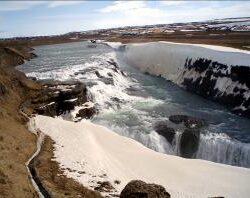


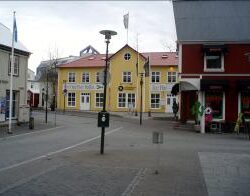


Blog
Pupils and students have been writing blogs regularly as the project progresses.
16.4.2008
Sweet dreams and tender feelings!
A wonderful darling, even dearer to us than to others, and our teacher Sireen guided us to the little IT class to write this last blog entry, because we are the only unruly students who have messed around with this. So it was only right for us that we were exempted from class and were able to create this great literary masterpiece together.
Inspired by the toffee balls, we decided to write some last-minute thoughts about the big thoughts and expectations of the Iceland project members, the fantasies the size of a whale. So now, there are only a few more days until the trip is almost over and there's no coming back if you don't find souvenirs. There's been a lot of hustle and bustle this past week, I can't really stand to stay in my pants. Is it a little slow or am I just kidding?
It lasts, lasts and lasts. That day, that sunny Sunday morning, doesn't seem very close, but luckily the energy burst from the toffee balls gives us the strength to wait. We've been buying a lot of stuff to take with us, outdoor clothes, suitcases... I still need a coat.
The flight might be a bit rough, as it's never been flown before, but I guess we'll survive... And if we don't, they'll find us in the Atlantic.
Now I feel like eating! Great white shark meat or maybe even whale meat! That wet breeze from somewhere carried me to my nostrils. The best thing about eating is of course… Oh my, the Blue Lagoon. Everything is known to be nice. We decided at the same time that on July 18.7th we would go see the movie Mamma Mia. After all, my father was Swedish and the Swedish language is close to Icelandic.
We also ordered shirts with “Ek skil ekki islensku.” (“I don’t understand Iceland.”) They haven’t arrived yet, so we’ll see if they’ll be available… They were supposed to be pretty cute… We even made a song: “Give me your passport, give me your passport. I’m going to Iceland, I’ll cross the water. Give me your passport.. My husband is a Viking..”
Hey, stop it now. If you don't get where you're going, then you'll be held hostage voluntarily by the Vikings (handsome, rich, muscular, buy them from the market if you can't find them otherwise).
Laura&Jenni
7.4.2008
Now I'll write my own feelings. Today was an information session for parents and young people involved in the project. There, we discussed the project's events, such as the equipment to bring, how we have raised money for the trip, as well as the articles we have written and everything else we have achieved in the project. Now we are looking forward to going on the trip. Thanks and a bow to the principal and teachers + funders.
Niina confirms :)
21.3.08.
Hello everyone!
It's Easter break and Good Friday, but I thought I'd write a blog. There were only 4 days of school this week and one of them was a skiing trip, so I didn't do anything for the trip to Iceland... Except of course I wrote this blog! In exactly one month we'll be in Iceland, YAY! We've already chosen what we're going to eat there for two nights and have sorted out our rooms. Nothing else here. See you later.
Hanna confirms
18.3.2008
There's only a little over a month left until the trip to Nonii! There's been a lot of selling and other things to do for this, but what's been happening this week is the Iceland project, hmm well at least my dad and I paid our deductible and then there was a gathering in the auditorium where we got some great information and rules for the trip. Then we decided on some food in advance. I haven't really done anything else for the project this week except of course writing this blog :D ! which came a little late but it came anyway ;) ! But I don't think I have anything else to do, I'm looking forward to the trip J
Päivi
14.3.2008
Therrve!
What have you done this week?? uh… Well, we had a meeting on Tuesday this week about Iceland, which I missed because I was home sick. But Sirpa came later to ask what I should eat there, etc… But this week I have also been making sure that my passport works because I had been out for quite a while, but it is fine!! I also recently had to pay the deductible. I thought I had already paid it, but it turned out that it has not yet been paid. So now the trip to Iceland is confirmed, that we will go there. In addition, I have made this blog here :) :)
We're already looking forward to the trip!! It just so happened to coincide with another trip for which we had already purchased non-refundable flight tickets. But that trip was postponed and we're coming to Iceland!
Markus
12.3.2008
This week we collected money from the sale of toilet paper, we were allowed to return it earlier, but it had to be brought in by Thursday at the latest. I managed to sell all the papers on time myself. We're leaving on the trip in a little over a month, I'm already looking forward to the trip and I guess everyone involved in the project is already looking forward to the trip. I even returned the so-called slave labor money to Ain, although I don't even remember the return date, although the job isn't done yet, the money was given in advance so I could pay for this, so there's still 6 hours of work to be expected...
Sami
14.2.2008
Happy Valentine's Day everyone!
The project was confirmed some time ago and now we are collecting the last few funds. Tomorrow is the first due date for the deductible, so we will be sending money to Pasi again, who will deliver it. Toilet and kitchen paper came up for sale again last week and I first bought 6 packages of both, but relatives needed paper so I had to buy a couple more packages on Tuesday this week.
I'm looking forward to the day when we can travel to that island that we've been working hard for. Tomorrow is the last day before the skiing holiday when we can relax a bit by the Rukatunturi fell. My short film about Icelandic culture will probably be on this site soon, so go and see it and be amazed!
Janne acknowledges and thanks
11.1.2008
Happy New Year to everyone, from me too!
What would I have done for our international project this week? Hmm… At least I delivered home and back to school the parents’ evening note that we needed so that we would know how many parents we baked buns for, etc. In addition, this weekend I did the second half of my “slave work day.” That is, those of us involved in the project had to go to work for six hours at some company or other. I myself went home to work for three hours and went to work at my grandma’s for the other three hours. The work day cost my parents, company or whoever I went to work for 30 euros, so our hourly wage was 5 euros, which must be delivered to the teacher by the end of this month. My tasks included, among others, cutting trees, filling the woodsheds, raking the yard/making snow, mowing the lawn and looking after my little siblings. The work day went quickly and of course I earned money for the project. Actually, working for a common cause is nice. In addition to all this, I wrote this blog. (Although I was afraid that I wouldn't make this long enough. :) )
City
14.12.2007
For the Iceland travel project, I have made a presentation on the Flora of Iceland this week.
I presented it to our class. It took about ten minutes. I've been doing extra homework because I still want to raise 30 euros for the Iceland project. This week, my thoughts have already been on preparing for Christmas at home.
Pia
13.12.2007
We have gathered once this week for the Iceland project. We were told about our work tasks and shifts as Christmas shopping packers at the local grocery store. This should bring in a little extra money for our trip. The project work is also going well. The article about contemporary Icelandic cinema is ready, as is a power point presentation on the same topic. Now I just need to present it to others. The trip to Iceland itself still feels quite far away, but probably after Christmas the departure will start to feel real. At the moment the near future looks busy, because although a lot has already been achieved, there is still a lot to do. Fortunately, motivation is high and the planning will probably continue as it has started. Iceland, here we come.
Lotta
7.12.2007
This week I have been preparing a PowerPoint presentation based on my article, which I will present to our real group today. We gathered on Monday to tell you how the calendar sales have gone and some still had “a few” left. The week has been a relaxed one for the project, as I have sold all my calendars and have completed a “day of slave labor”. I am looking forward to all the new experiences that the trip to Iceland will bring and all the things to see in the country.
selena
30.11.2007
Mo!
This week I've managed to sell everything Merikarvia – calendars. My presentation on Reykjavik will be ready soon, it just needs to be polished. And then it needs to be presented to our group. I'm already looking forward to the trip, as I'm sure everyone involved in the project is.
Jutta
23.11.2007
Hello! :)
This week I have sold all the calendars. I sold almost all the calendars through my mother's company, or actually my mother sold them, so it wasn't difficult for me to sell them. :D I also almost finished the real article, now I have to make a PowerPoint presentation. It's almost Christmas and then we'll be closer to going to Iceland again! ;>
Well, I have no choice!
-Beautiful
12.10.2007
This week, me and a couple of my friends received books that deal with Scandinavian mythology. I received a book called Odininratsu, Skandinaanivoset jumaltarut. Based on the book, I should later do some kind of essay or “presentation” on the topic. I read the introduction to the book, or about the first twenty pages, and the gods and the myths associated with them seemed complicated. The introduction says that these gods and myths appear in different writings in somewhat illogical orders and that is what makes them so interesting. My parents went to see the play Thorin vasara in Turku over the weekend, which we are also going to. I talked to them about the play and they liked it.
Summer H
5.10.2007
The week was very quiet regarding the project. Our dear teacher Timo Siren just asked a new willing and conscientious student to write a blog about this week. That's what I did. Even though the toilet paper money was returned last Friday, I only managed to sell the last package this week. So my finances are no longer in the red. Now the new tasks are already weighing on me. I've already been thinking hard about where I would go to work so that the necessary 30 euros salary would drop into the Iceland project account.
Jarno acknowledges.
28.9.2007
On Monday we were told about the Iceland project that we were going to be sold as slaves! We were supposed to sell ourselves as workers and we would have to get 30 euros as a salary, which would go to the school without any deductions! The toilet and kitchen paper money should have been brought today, but I haven't even sold all of it yet... Toilet paper for sale!! :)
I read some stuff about Iceland online: it sounds like a great place. I probably won't be able to visit it again after this trip. Waiting for April...
Anna
21.9.2007
Hi, this week it's my turn to write a blog about the events of the international project. One bag of toilet paper was sold today (Thursday 20.9.) and now everything is actually sold from my side and the money should just be taken to the school. Then I can say, to my regret, that I haven't done anything else for the project, because there haven't been any information sessions or anything like that this week.
There
14.9.2007
This week there were no joint gatherings at school, but everyone probably sold toilet and kitchen paper door to door. During the week I got to know Iceland, or mainly Icelandic horses, and nature, using the internet. I talked to a friend of mine who has been to Iceland a few times and he told me about his own experiences.
miina
7.9.2007
This was the first week that I did something for the project. Previously, we only had lectures about the project and assignments to do. Now at least we got toilet and kitchen paper to sell. This went well for the work to be done, as I only had five intact and one broken toilet paper bag to sell instead of the original 9 toilet paper bags and 6 kitchen paper bags. There were no major problems with the sales, as my mother bought every single one. And now at this point you can probably say that I have also written my blog post related to this project.
Juice
31.8.2007
This week, the school was brought household and toilet paper, which should be sold to finance the trip. The actual physical work was carrying the papers to the school premises, so not very much. So the project has started to progress and right at the beginning of the week there was another meeting, where they explained in more detail about the sale of the paper and the trip and the project standards. The sales could have already started and it would have been advisable to have done so. However, the papers have not yet been collected from the school. I would have expected the sales to be difficult, since there was so much talk about it and I was told to act immediately because "the fast eat the slow", but I have already sold them all. All that remains is to take the product to the buyers. I was also told to invest in the thesis, and the text must be "your own" and not directly copied ready-made information. This forces the writers to really work. I think that at least everyone thinks it is not too painful, but in fact quite nice, because you can choose the topic yourself. At the same time, you will increase your knowledge about the topic you want, and believe it or not, it is actually beneficial.
at some point. During the real-life classes, we first got to know the project, and now we have moved on to searching for information, mainly using computers. We are only at the beginning and there is still a lot to do, but we are already at a good stage, everyone is aware of that. Final permission from parents, including their signatures, was also asked for before the trip, and now those who are going along are fully affiliated with the “Icelandic project”.
Chris.
24.8.2007
Across the open sea- MerikarviaFrom the Fairy Tale Island is a joint international project between the middle school and high school, culminating in a trip to Iceland. The week started with an announcement announcing the 40 pupils and students selected for the project. A working group of 8 people was also selected from among the participants in the project, and was tasked with taking care of Merikarvia and the production of a calendar themed around the Sea. The working group met on Wednesday, August 22.8nd, when everyone was given a topic to photograph and important dates. The students took up the challenge with great enthusiasm and the production of the calendar was started, and the whole project got off to a solid start.
Sahara
Kokemuksia
Juuso Viikila
Iceland 2008
Our journey started at 5.00:XNUMX am from the high school yard. By then, many people had probably been awake for a long time waiting to leave, at least I did. On the way, plane tickets and passports were handed out, and a large part of the group then continued their short sleep. The first stop was at Forssa Autokeitaa, where we ate at a familiar and safe, but perhaps a bit slow, eatery, Hesburger. From Forssa, we trudged towards Helsinki-Vantaa Airport.
From Helsinki Airport we flew across seas and countries to Oslo. Oslo Airport had a very interesting escalator, or rather a moving carpet, and when we rolled down it, we would pass by for a while. People looked at us a little strangely.
From Oslo airport we rose to the heights again and flew over the Atlantic towards Iceland, our hair flying. At this point I have to say that the best weather of the whole trip was up there above the clouds. Landing at Keflavik airport was a bit of a shock. The whole of Iceland was completely deserted, and a tasteless brown color. A bus ride took us from Keflavik to Reykjavik, where we stayed at a hotel. Our room was a surprisingly nice cabin; overlooking the mountains and the sea. In the evening we went to eat at the pizzeria Rossopomodoro, and from there we returned to the hotel to “sleep”.
Waking up early on Monday morning didn’t seem too bad. We went for breakfast and then took a bus to visit our partner school. On our way back from school, we stopped to splash around in the blue and salty hot water pools of Blue Logoon, oh my, what a treat. The water was at least +40 degrees, at its hottest it was definitely over +60 degrees. We could have stayed at Blue Logoon for a whole week, but then evening started to fall, and the journey headed back towards the hotel. We left the hotel to eat, I chose a random place to eat, so we weren’t sure where to eat when we left. We asked the locals about good pizza places, and they also recommended one. My neighbor Laura had to walk with poles, so to speed up the journey, I took her on my backpack and then we toured the city. The best pizzeria in town turned out to be a takeaway place, so there was no other way but to look for a new place. The best option in that case was the Rossopomodoro, which we already knew from the previous day. After this, we went back to the hotel to sleep, just like the previous day.
Tuesday was the first nature day in a way. First thing in the morning, after breakfast, we went to the harbor for a whale watching session. The boat trip took less than an hour before we saw the first big whale. For once, on the whole trip, we didn't really see a single whale, just some porpoises etc. I don't think anyone got any decent pictures, at least I only got a few that I could recognize as whales from the picture.
After whale watching, we took the bus to the southeast, where we found two beautiful waterfalls. In both cases, the water fell at least 50m down, and splashed quite spectacularly onto the surface of the pond waiting below. The whole air was filled with that water vapor. I wish that Jarno-man had dared to take a shower in the water. It must have felt really nice. I myself went with Antti and Veera to climb up the mountain wall and found a ledge from which there was perhaps a 40m straight drop to the ground. It didn't look nice from up close. After checking out the falls, we drove back to the hotel and did our normal evening chores, after which sleep was delicious for the first time.
Nothing special happened on Wednesday, which was city day. We had a guided tour of Reykjavik and an afternoon of shopping. The local high school students were having their prom that day. They were dressed up as penises, Martians, penguins, etc. We chatted with a few of these girls in the city, and got invitations to a prom party that evening. We then went to the hotel to wait until the city tour was over. At least I had run out of money well in advance.
Thursday was the second nature day of our trip. First we drove to Thingvellir, the place where the American and Eurasian continental plates separate from each other. Those rugged rock walls were like a magnet for Jarno and me, the higher the place, the more we absolutely had to get there. In the same place there were also ponds formed from glacial water, which at their deepest could be up to 5 m deep, but still we could see the bottom without any difficulty, I can tell you that it looked great.
After this we continued our journey to Gullfoss, the largest waterfall in Iceland. I guess that means the largest in terms of water volume, because I don't think the falls were very big. But the place was quite impressive, at least from up close and from a high cliff. The roar was enormous. At Gullfoss we were also offered pickled shark, ram's testicles, sheep's brains and dried fish. Maybe you would learn to like them if you ate them more often, there was nothing like the most delicious sapuska in the world.
From Gullfoss we drove to Stokkur, in the vicinity of which you can also find Geysir, after which these hot springs that occasionally shoot boiling water get their name. Stokkur erupted about 5 times during our stay. You could take some pretty cool pictures of it, as long as you were fast enough. Some strangers got the boiling water pouring down on them – OUCH. We ate at Stokkur and then drove towards Reykjavik again. On the way, we stopped at the volcano’s crater. The crater gave a good idea of how much power there is under that crust: a few billion tons of rock had just popped into the sky from that point. After examining the crater, we drove to the hotel and had some free time in the city. In the evening, we packed everything up for the morning departure. Yes, that 25 minutes of sleep was quite enough for the next day’s journey.
That initial perception of Iceland's ugliness completely disappeared as we visited various attractions. Its incredible barrenness was finally understood as exotic. Similar terrain, i.e. thousands of square kilometers of torn and bulging lava fields, hot springs, mountains and waterfalls, is not found in every country in the world.
Jarno Virtanen
Iceland trip 20.-25.4.2008
My journey began at around 5:30 on Saturday night when the bus finally reached Viisarinmäki. The atmosphere on the bus was reasonably cheerful despite the early wake-up call. After a few hours of waiting at Helsinki-Vantaa Airport, we boarded a plane to Oslo. In Oslo, we changed planes and noticed the Norwegians’ “ability” to organize things. The receptionist didn’t seem to understand anything. Eventually, however, we got on the plane and continued our journey towards Iceland.
Upon arriving in Iceland, my first thought was, “What a wilderness this is.” Rugged terrain as far as the eye could see, and the most common vehicles seemed to be SUVs with huge tires. “Tyres as tall as a horse,” as Juuso kindly put it. We also saw a local drunk at the airport. This gentleman told us his entire life story in just over 15 minutes.
In Reykjavik, we were waiting for something at Hotel Fos or at least something like that. Our hotel was absolutely great overall and I especially remember the really nice receptionist, with whom we even played strip poker one night. Or, he didn't play himself. He just wanted to watch. Unfortunately for him, the only item of clothing that ended up leaving was his socks. After our stay, we went for pizza where I, Juuso and Ville ate a slightly more special pizza, which included, among other things, octopus and shellfish.
The next day we visited a friendship school. The atmosphere there was a little different than in Finland. It seemed like the students were eating all the time. The classes were reasonably relaxed and the teachers seemed to be very flexible. Especially when it came to absences. After school we went to the Blue Lagoon where we could have stayed and enjoyed ourselves for the rest of the week! The 40-degree water was so nice. The Blue Lagoon was definitely one of the best destinations on the trip.
The next day was a nature day when some went whale watching and others went riding the famous Icelandic ponies. Whales were seen and certainly ponies too. In the evening we visited a waterfall. I even went to take a small shower under it. It was nice!
Wednesday was a city day which included a drive around the city and a visit to the Saga Museum. The people in the museum were really authentic looking. The creator of the characters said, among other things, that he used his family as models for the Viking characters. In the afternoon there was free time to wander around Reykjavik.
Thursday was a so-called excursion day which included a tiring drive, but the drive was compensated by the sights we came to see. The large waterfall was especially my favorite and I could have stayed and looked at it for hours. Geysir was also quite nice but not a mind-blowing tourist attraction. Maybe the reason is that there are only a few active ones today and the rest of the Geysirs are going extinct. I don't know if climate change can be blamed for that either.
The return day on Friday was mostly sad and I wish I could have stayed longer in Iceland, but it's always great to come home.
Ville Viljanen
A trip to Iceland in its brevity
Unfortunately, the trip to Iceland was over as quickly as it came. The trip was, in my opinion, and probably in the opinion of others as well, too short.
On the day of departure, it was a pain to get up at about 04:30 in the morning, especially after a very short night's sleep. I couldn't bear to leave for school in the morning, so I announced that I would be picking up the bus from the bus stop about 100 meters away. Luckily, we spent the journey in our sleep. When we got to the hotel, I noticed together with my "roommates" Jarno and Juuso that we had the biggest room in the group! And the biggest TV, which we could watch football on. :D
On the first “official” day we were at a friend’s school, where I was in a German and woodcraft class. However, we left the latter class after about 30 minutes, because the locals were not eager to talk and did not care about us. We also went swimming in the Blue Lagoon
The second day we went “titaas whales” or whales on the roof. All the whales were always “about 50 meters from here.” We also visited 2 waterfalls.
The third day was spent walking around Reykjavik. First there was a 2,5 hour sightseeing tour and then shopping! I bought a 6000 kroon cap and other “necessary” things.
On the fourth day we were touring around Iceland: Geysirs, waterfalls and Thingvellir Castle. The geysers were a personal favorite, especially the Little Geysir. Also, there was a little Viking next to our restaurant.
Departure day came quickly. Too quickly. I had to sleep on the plane again.
The trip was absolutely fantastic! Thanks to everyone and at least it was done :D
Ida Palomäki, Anna Hamppula and Niina Varheenmaa
The Story of our Iceland trip
Sunday-Monday
Sunday morning at 5 am our journey towards Iceland began. No one was late for departure, but we were all tired. Some of the group boarded the bus along the way. Many had stayed up all night, eagerly awaiting the journey.
The first stop was the Forssa car park, where we ate to sustain us all the way to Helsinki. We had announced in advance that we were coming to eat somewhere and even told our order in advance, but the service was very slow. From what I heard, the teachers did leave feedback.
The rest of the trip to Helsinki went really well. We arrived well in time, despite the luggage in Forssa. After getting our tickets and going through security, we still had a little time before our flight left, so we were able to walk around the airport and look at the stalls and kiosks. Anna, Niina and Kristiina decided to stop by the airport café for a coffee to drink our last Finnish coffees for the week.
Once we got on the plane, the relentless seat swapping began, as everyone wanted to sit next to their friend. I was very surprised to hear that many of us had never been on a plane before. We first flew from Helsinki to Oslo and from there to Keflavik. In Oslo, we had to go through security again. Everything went really well until we arrived at the ticket counter to pick up our plane tickets. One of the ticket sellers somehow managed to delete some of our information and it took about forty minutes to get our tickets! After getting our tickets, we walked around the airport for a while, checking out the seats. It was quite a surprise when I ran into my Swedish cousin at Oslo airport, but that was all. The second flight went smoothly too, but once again, we were constantly changing seats.
Finally in Iceland! My first reaction was: “Wow, what a smell!” It was true, the air smelled awful, but they say you get used to it in a few days. We grabbed our bags and went to find our bus. We were met by an Icelandic language teacher. The journey continued towards Reykjavik.
When we arrived at the hotel, we were assigned rooms and as soon as we got the key, we went to prepare for a new departure. This time, only to a nearby restaurant called Pizza Rossopomodoro. We ate our fill of good food. After eating, we went, some directly, some through the shop, back to the hotel. We went to bed almost immediately, because the day had been long and hard and we would have to get up early in the morning.
Monday morning, and the time was mixed up. I woke up at 6 even though I could have slept another half hour. Iceland is three hours behind Finnish time. We had been given a strict schedule that we had to follow to make sure we got everything done on time. Breakfast at 7 and departure from the hotel yard at 8, because we had to be on time for school.
It was a great experience to get to an Icelandic school to get to know the students and teachers and the building itself. First, the local study guide took us on a tour around the school. We got to see each class and hear what was being studied in each class. When the tour was over, we were also able to participate in the lessons themselves. We had been divided into groups where we went around the classes. I myself got to an English class, where our group of five was further divided so that only one Finn came to each group. The Icelandic young people in my group were very quiet. Only one boy talked to me and asked about Finland and why we had come to Iceland.
The second hour was spent in the metal class. I do think it was stupid to put five Finnish girls in a metal class. It was noticeable that the teacher was not at all prepared for our arrival. We walked around the class and looked at the equipment and the work done by the young people. We left the class early, because it was frustrating to just stand still for about an hour.
After saying goodbye to the teachers and students, we drove towards the Blue Lagoon spa. The steam rising from the Blue Lagoon water could be seen all the way to the road. The water was completely white and even hot! It was wonderful to float and swim in the water. We got to give ourselves a facial scrub with a white substance that was in buckets on the edges of the naturally formed pool. I even got a strange feeling in my head. The water was not good for my hair. I heard many people complaining about the condition of their hair after swimming. Mine was in absolutely terrible condition too. We were told that the water causes it, but that the hair will return to normal in a few days.
The only thing that caused difficulties was using the key, because the bracelet acted as a key. We don't have the same lock tactic in Finland so it took us a long time to understand how it worked. (And of course we didn't realize to look at the wall where there were pretty clear instructions in English, with pictures!) When we had soaked and wriggled in the water long enough it was time to go back to the hotel. The bus ride felt short because we had been able to relax really well and we had a lot to talk about the day's events.
When we arrived at the hotel, we went to eat again almost immediately. This time we had to choose what we wanted to eat. There were three options; fast food, Thai food or steak, etc. I was at a Thai restaurant with many other people from our area and we had a great time. I sat at the table with Anna, Niina and Kristiina and by chance we ordered the hottest dish on the menu. The waiter looked confused when we said the name of the dish and asked very hard if we were sure about the dish and warned us about the heat of the dish. However, we said that we wanted the dish and even if it was a little milder. The waiter nodded and laughed. When we got the food in front of us, we went hungry and attacked the food. After tasting it, we almost spit fire, because the food was so hot that I didn't taste anything for the rest of the day. We ate sweating and grimacing in pain and drinking liters of water. After we finished eating, the waiter came to ask how we were doing and how the food was delicious. He said he only put a third of the amount of spices that the food actually needs. He laughed at us and our red faces. He even gave us the food for free because we couldn't finish it all.
We returned to the hotel, but stopped by the store just in case we got hungry at night because we couldn't eat much. Sleep came easily, as the day had been full of activities.
Tuesday-Wednesday
On Tuesday, some of the group went horseback riding and some went whale watching. We rode and did a two-hour run in the countryside and at the same time saw the beautiful landscapes of Iceland. We were divided into experienced and beginner groups. The experienced group went faster and was tölt and shot almost the entire time. After the horseback riding, we returned to the hotel, where after we cleaned up a bit, we went to see the waterfalls. You could walk behind the Seljalandsfoss waterfall and it was wonderful there, except that we got a little wet. In the evening we went to dinner and continued the evening at the hotel with friends.
On Wednesday we had a guided city tour. We went to see, among other things, the church. After that we went to the museum. It was great there and some people thought the wax figures looked quite lifelike. We listened to the commentary in English on an mp3. When we returned to the hotel we were able to go shopping. There were no good shops there and it would have been nice if we could have bought some souvenirs. But that didn't matter, the most important thing was that we had fun and embarrassed ourselves more than once. In the evening we went to a nice restaurant and ate the dishes we had chosen at school. It wasn't bad, but it wasn't particularly good either. There was a happy atmosphere at our table and some people were excited to make a heart out of glasses for the waiter. Then we went back to the hotel to sleep.
Travel program
Sunday 20.4. Departure day
Departure MerikarviaFrom 5:00 a.m. in the high school yard
Flight Helsinki-Oslo (Finnair)
Flight Oslo-Keflavik (Icelandair)
Driving to Reykjavik
Dinner together at Pizzeria Rossopomodoro
Monday 21.4. School day
School day at Fjöllbrautaskoli in Sudurnesja
Bathing in the Blue Lagoon
Tuesday 22.4 April Nature Day
Reykjavik Whale Watching (boat trip to see whales) or riding Icelandic horses
Trip to see Seljalandsfoss waterfall
Wednesday 23.4. Reykjavik Day
Guided tour of Reykjavik
Exploring the Saga Museum in Perlan
Free time in the city
Dinner together at Restaurant Reykjavik
Thursday 24.4. Excursion day
Bus trip crisscrossing the Fairy Tale Islands, with destinations:
· Thingvellir county seat and nature park at the junction of continental plates
· Stokkuri geyser
· Gulfoss Waterfall
Friday 25.4. Return day
Departure from Reykjavik
Flight Keflavik-Helsinki (Icelandair)
Bus trip Helsinki-Merikarvia
Return to school at approx. 20.00:XNUMX PM
Packaging instructions
- Note! only one bag and an additional hand luggage item, e.g. a backpack (name and address on both). The maximum weight of a bag is 20kg and hand luggage is 6kg. Excess weight is charged for bags that are too heavy.
- Note! Flight safety rules are very strict. You are not allowed to carry any type of sharp weapons (scissors, nail clippers, pocket knives, etc.), fire starters or liquids in your hand luggage. Water bottles, perfumes, oils, etc. must be packed in a checked bag. Pocket knives, etc. are not needed at all during the trip. Technical devices (cell phones, mp3 players, cameras, etc.) must be packed in your hand luggage. You must have a prescription for any medications you take on the flight.
- Passport (must be submitted to the principal no later than April 10.4.2008, XNUMX)
- Money for your own purchases, max. 100 euros (breakfast and one hot meal/day are included in the trip price)
- A necklace for storing your passport and money
- Good walking shoes (not new)
- Enough clothes, especially outdoor clothing, as we will be outdoors a lot (it is cold and windy in Iceland in April, e.g. a windbreaker with a fleece or sweater underneath is good, also bring long underwear, a hat and gloves, you don't want to ruin your trip by getting frostbite and getting sick...)
- Swimsuit and towel (we're going to the spa ;)
- Personal hygiene items and your own medication (a copy of the prescription must be given to the principal by April 10.4th, as well as information about allergies, motion sickness or seasickness, and medication for these ailments)
- Sunglasses
- Cell phone and charger (balance limit must be removed for the duration of the trip)
- Camera and film/memory card+charger (A common photo CD will be compiled from the photos)