


Digital Youth 2018-2021
 MerikarviaStudents at the upper secondary school have the opportunity to choose from special courses related to international education and entrepreneurship offered by the school. In connection with the courses, a special project is also implemented annually, which usually involves a collaboration project with students from a foreign educational institution and a visit to their home country.
In the academic years 2018 – 2019 and 2019 – 2020, we are participating in a large international Digital youth in the project.
The Digiyouth project aims to develop young people's entrepreneurial, technological and collaborative skills, and to give young people the opportunity to practice establishing and operating transnational start-up-type student companies focusing on digital products, services and solutions. At the same time, the project develops methods for integrating entrepreneurial and technological education in both primary and secondary education.
The project's cooperation network includes several universities and general education institutions from Latvia, Sweden, Finland and Estonia. The entire project is coordinated by the University of Tartu in Estonia. The project has been funded by the European Regional Development Fund (INTERREG Central Baltic program).
Participants
The project involves MerikarviaNine second-year students from the upper secondary school, and Jani Helenius and Timo Siren as supervising teachers. The project will last three semesters for the students.
Student teams are formed to work and establish start-ups, aiming to bring together as diverse a range of expertise from different countries as possible, so that the team can work together to develop a viable business idea and product or service concept. Work continues throughout the project, both in joint meetings and on digital platforms.

Picture: Merikarvian high school's DigiYouth group at the Rauma meeting on October 17, 2018.
Project progress
The project will last for six semesters. During 2018–2021, entrepreneurship modeling of digital products, services, and solutions will be implemented with the participating students. The work will develop the entire product development chain from idea to commercial utilization, and increase the general entrepreneurial, technological, and collaboration skills of young people.
During the project, young people have the opportunity to practice in practice the establishment and operation of start-up-type student companies focusing on digital products, services and solutions. The work is very international on a practical level throughout the project and develops communication and cooperation skills, as the teams of student companies founded by young people include young people from several countries. 2-5 general education schools and teacher groups from each country, as well as a mentor network, participate in the project. During the project, methods are also developed that can integrate entrepreneurship and technology education in both primary and secondary education.
Rauma meeting: SparkUp Days!
The DigiYouth project was started in schools right at the start of the school year. At first, during the first lessons, we jointly found out what kind of project we were starting, and we considered each person's own interests, strengths and special skills that could be useful when establishing a StartUp company. With the help of preliminary tasks, we also mapped out what kinds of different roles and areas of expertise were needed when the teams' own business ideas were implemented. At the same time, we prepared for the Rauma Spark Up Days event, which was the first joint meeting of the entire project.
In Rauma from October 16th to 19.10th, young people and teachers from different countries were able to meet each other in person, get to know each other, and establish cooperation to establish joint companies.


The time available for the Rauma meeting was intended to be utilized as well as possible, so there was a lot to do and the program ran from 8 am to around 9 pm. During lunch breaks and in connection with the evening program, there was also an opportunity for more informal discussion and getting to know each other. The actual work took place in the premises of Villa Tallbo and the Rauma unit of the University of Turku, where interesting lectures and numerous workshops were organized.


 During joint lectures and presentations, experts from various fields and experienced startup entrepreneurs provided information on matters related to establishing digital startups, inspiration on the possibilities of technology, and views were heard on how technology has already changed the world and what developments are on the horizon in the near future.
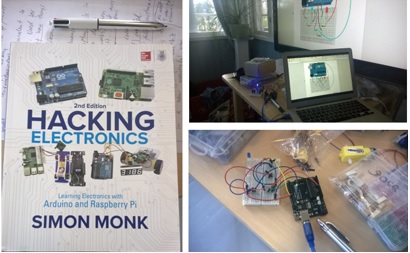
Most of the work still took place in small groups on various exercises and in separate workshops. It was possible to choose the workshops that most corresponded to your interests, and you could learn about, for example, app development, electronics and robotics, smart textiles, game and application development, and the design of corporate brands and logos.
During three days of intensive work, groups gradually began to form as young people interested in similar things found each other and were able to exchange ideas about possible product or service ideas around which a company could be built.
By Friday, the remaining teams had been formed, and in Friday's workshops on the campus of the University of Turku, plans were made on how and with what schedule the work would continue after the meeting. The collaboration will utilize digital platforms and electronic tools chosen by the teams, so the work will progress well, even though the next meeting of the entire project is not planned until early June, when we will travel to Visby, Gotland, Sweden for a joint meeting.

Picture: Spark Up Days culminated in a more festive dinner at the Rauma Water Tower.
Tartu: StartUp Days - "From Zero To Hero!"

Picture: We left for Estonia for the Tartu StartUp event on Wednesday, January 23.1. Taking off from Turku Airport on a short-haul ATR-72 turboprop was also a new experience for many!
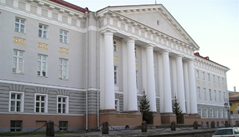 Students from the DigYouth project had the opportunity to participate in a large conference held in Tartu, Estonia, from 23 to 25.1 January. To the StartUp event. The trip was an excellent opportunity to learn and gain perspective from the operations of technology startups that have progressed to different stages. Tartu is also a real hub of knowledge, as it is a well-known university city, home to the nearly 10-year-old and respected University of Tartu, with nine faculties and over 000 students, among other educational institutions.


There were over a hundred exhibitors at the fair. At the startups' own presentation stands, it was possible to see how a functioning company has been built around a product or service idea and what is involved in starting and growing such a business. In addition to a good idea, of course, practical knowledge and experience are needed on how to find the path to a functioning company and how to proceed in the operation.
In addition to exhibitors and startup showcases, the event featured over a hundred world-class speakers and experienced startup entrepreneurs, whose presentations provided inspiring visions of the possibilities of technology and how things can be done in practice, as well as a wide variety of practical experiences from setting up startups, as well as successes and failures in business.
In addition to entrepreneurs, the keynote speakers included top experts from other fields, including Swedish astronaut Christer Fuglesang, who gave an inspiring presentation and has been in space five times and worked on the space station, and Cameron Manwaring, who has become an expert in human behavior on the internet and social media networks and has become one of the industry's top experts through experience. He shed light on, among other things, the regularities associated with sharing content, such as the popularity of videos and the creation of viral hits. These are also utilized in marketing, and in addition to traditional marketing methods, social media networks are already utilized in many ways.


 In addition to presentation points, discussions, presentations and workshops, the event also featured continuous “pitching” competitions on a separate stage. Following these presentations was particularly interesting. In the startup world, pitching means a presentation in which the company’s idea and operations are presented briefly and clearly to, for example, customers, financiers or other partners. The basic formula for pitching became very clear, i.e. first the problem is presented for which the company offers a ready-made solution, and then that solution, i.e. its own product or service, is presented. In addition, the target market is often reviewed, how to achieve a good market position is achieved, the team is introduced and possibly prototypes, a concept model and history of what has already been achieved are presented. The goal is to convince the audience that this idea is worth getting to know more about and implementing the product/service or investing in it.
The pitching competitions at the startup event featured around fifty teams with gold-plated business ideas, each of whom had a few minutes to convince the jury. Pitching certainly develops young entrepreneurs' presentation skills and confidence, as well as their ability to present things clearly and concisely. Of course, when preparing for a presentation, your own thinking and idea must be clear in mind.
Prototype phase: planning, implementation, and product and service design!

At the start of the spring semester, the team moved from the ideation phase directly to the practical implementation of their own visions. The teams' goal is to have a concept model of a finished product or service, as well as a working technology demo or other prototype of the finished product, ready by the summer. In addition, they must naturally finalize their startup company's brand and visual identity, as well as product and service design with a business model in mind.
Developing a prototype is certainly one of the most interesting stages in starting your own startup, as it gives you the opportunity to use all your knowledge, skills and creativity, and to implement your own ideas in practice, even into a finished product or service. At the same time, you have the opportunity to develop your own expertise tremendously by learning directly in practice about top-level graphic design, various technologies, business models and product and service design, and find solutions together with your own team, instructors and mentor experts in the different stages of building a prototype.


The finished product and service prototypes, along with concept models and technology demos, will be presented at a trade fair in June in connection with the Visby Big Meeting in Sweden. At the trade fair, each team will have its own table and presentation point where the product/service will be presented. Naturally, teams must prepare the presentation well. There is usually not much time to present their idea and product and make a positive impression, and in the Startup world, people often practice a lot of “pitching”, i.e. honing their presentation skills and the content of the presentation to the best possible level. This is a great opportunity to learn and practice presentation and expression skills, which are very important skills everywhere, both in working life and in other social interactions!
At the fair, you can also give feedback on other teams' products/services, so everyone can also tour the fairgrounds and comment on others' ideas. After all, a prototype is not yet a perfect final product, but prototypes are developed, sometimes in several versions, until the final product/service is achieved. The development process requires feedback from users, and feedback allows teams to see their product or service from the users' perspective. Feedback from users can be collected, for example, by interviewing them, observing whether they can use the prototype independently as planned, using a questionnaire, etc. An ideal product/service is desired from the users' perspective; it is necessary and pleasant both functionally and in style.
Visby: Big Meeting – “Prototype Fair”

Picture: We left for the Visby Big Meeting on Sunday, June 2.6nd and arrived in Gotland late in the evening.
The Big Meeting of the prototype phase of the DigYouth project was organized in Visby, Gotland, from 2.6 to 5.6.2019. The Big Meetings are common to the entire project, and in Visby all teams had the opportunity to present their own technology startup. During the academic year, they had already managed to build presentable prototypes based on their own product or service idea, and some teams even had functional technology demos in addition to concept models. At the same time, the teams had the opportunity to discuss their own work with others involved in the project and see what others have achieved.
 Summery Visby was chosen as the location for the DY meeting partly because a unit of Uppsala University is located there, Department of Game Design at Campus Gotland, which focuses on research related to digital game design and offers specialized university-level education in the field. The city also organized its annual DY meeting in the same week as the Gotland Game Conference (GGC) event, which we were also able to participate in with the whole group. In addition to the actual work and the official DY program, there was still plenty of time for free time together, hanging out, and even walking around the city.
Visby is a very beautiful city with a long and rich history. It has been a UNESCO World Heritage Site since 1995, and Swedes themselves like to go there in the summer. The medieval old town has a lot of historical things to see, and the views that open up from high places over the city's rooftops to the open sea are stunning and worth seeing!


 The official DY program started on Monday morning. We gathered at Uppsala University's Gotland campus, where the teams could start preparing their own presentation points in the fair area. The whole Monday was spent building stands and displaying prototypes, posters, flyers and demos, while also having the opportunity to practice and finalize their presentations, pitches and speeches together as teams.
After the workday, we got our own bicycles from the rental company for the duration of our visit, which was particularly convenient since the accommodation was in cottages. Visby Strandby -camping area a few kilometers from the city center. In any case, many people still wanted to freely wander around the city in the afternoon and evening and see the sights and landscapes on their own.
The main event, the one organized on the university campus, opened on Tuesday. Prototype Fair -fair. To ensure that everyone could get to know the fair's offerings, the teams took turns holding their own presentation stand, while others toured the fairgrounds to learn about the operations and prototypes of other startups.
The fair showed that the teams' business ideas, product and service concepts are very different. The implementation was also at different stages for different teams, but the main thing that stood out was that all teams had created really great and well-thought-out products, and had progressed in implementing the idea as planned. There was also a lot of effort put into the presentation and presentation materials for prototypes and companies, and the teams' presentation points were skillfully implemented.


In addition to the fair's presentation points and discussions, Tuesday's event also featured a “Goldfish tank” -pitching competition on a separate stage. In the startup world, pitching means a presentation in which the company's idea and operations are presented briefly and clearly to, for example, customers, financiers or other partners.
The teams that participated in the Goldfish Tank had the opportunity to take full control of the stage and the audience, and try performing in front of a larger audience and a panel of experts. Of course, stepping on stage requires a lot of courage at first, but at the same time it gains experience and gives you a completely different kind of confidence for your future performances. By performing in front of a large audience, you also gradually learn how to present things and how to get the desired message across.


The program continued after dinner later in the evening, as there was a visit to a game conference held in a building next to the university. Gotland Game Conference is an event organized by Uppsala University, which has been held in its current form since 2011, and whose traditions extend even further back to 2006. At that time, the event was called Gotland Game Awards, and from the beginning it has been an opportunity for university students in the field to present their own projects and get to know the practical aspects of working in the field, game development, and various technologies.
 Game development is currently a significant sector of the entertainment industry, which is of great economic importance alongside the film and music industries. It also employs many highly skilled professionals, from scriptwriters and programmers to graphic designers and music composers. At Uppsala University's Gotland unit, you can complete both bachelor's and master's level studies in game design, and specialize in, for example, project management, programming with modern software production tools, and visual design for games.
While walking around the gaming conference, it was easy to see that game design involves much more than just coding in a suitable programming language at a computer. In fact, most of the game projects on display included tangible physical elements that were essential to the gaming experience and helped create the game world.


In many games, the controls of the game characters and the control of events were built to suit the theme instead of the mouse and keyboard, which also requires some manual skills in wood, metal and craft work, as well as electronics construction from the creators. Such projects would actually be interesting and very fun ways to integrate arts and crafts, technology and coding, as well as regular school subjects, even at the high school level!

From the Visby meeting we flew straight to the summer holidays, but in the autumn semester the teams will continue their projects. The aim in the autumn is also to get to know marketing, which is important in business, i.e. how to present your product or service to customers who might need it or benefit from it. The DY project will now be concluded for the teams involved in the third phase of the Big Meeting, which will be held in Estonia at the beginning of December!
Tallinn: Big Meeting - "Sales and marketing"
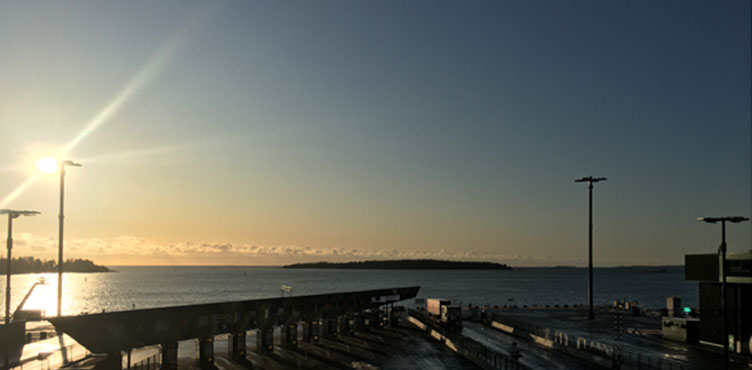
Picture: This time the Gulf of Finland was crossed by ship, and on the way there was an opportunity to view the Christmas seascapes during the few hours of daylight.
The Big Meeting for the marketing phase was held in Tallinn from 2 to 5.12.2019 December XNUMX. The autumn semester Sales & Marketing– during the phase we learned about issues related to selling the product and launching it on the market. We received guidance on the use of various sales and marketing channels, product finishing and branding, and of course graphic design and the planning and implementation of various visual marketing elements. Tallinn was selected as the location for the DY meeting due to its good transport connections, but it is also home to Tallinn University, on whose premises the event was organized.

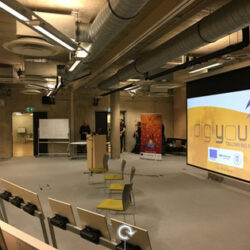

Good presentation skills are also essential in marketing and when working with customers and partners, and there was strong guidance on practicing them. At the Tallinn meeting, all teams had the opportunity to present their own technology startup in a large auditorium to a very large audience.
 Giving an impressive presentation on a big stage is demanding for anyone, especially when the working language was English and the presentations were also closely followed by top experts from the business and technology sectors from the startup world. The jury included, among others, Elizaveta Lebedeva (Bolt/Taxify, which revolutionized ride-hailing services with its technology solutions), Harri Ketamo (HeadAI, which develops intelligent software robots that utilize artificial intelligence and machine learning), and Adam Mayes (a game design expert from Uppsala University who has been involved in numerous gaming companies).
At the beginning of the Tallinn meeting, there was still time reserved for performance training, practice and polishing of presentations, but Tuesday was already largely spent in speeches and company presentations. During the meeting, the teams were able to present their own work, but also discuss with others, and see what others have achieved. For the students who participated, the Tallinn meeting also concluded the entire 1,5-year project, and for some, the contact will certainly continue even after DigiYouth, perhaps even working on startups.


In addition to the actual work and official program, there was still some time left for free time and to wander around the city. Tallinn is a city with a long and quite complex history. We spent the last afternoon taking a cultural walk in the old town located at the foot of Toompea Hill. It is already a sight in itself, where many tourists like to go, especially in the summer. But the streets of the old town and its Central European-style Christmas market are atmospheric places to visit during Christmas time too. There is a lot of historically interesting things to see in the medieval old part, and when the guide was an expert history teacher, the history of Tallinn and the Baltics with its different eras opened up vividly and perceptibly in a completely different way than reading about it in a book! After exploring the old town, we climbed up Toompea Hill, where the views from the walls of the old fortress, the state administration buildings and embassies, and the open sea over the city's rooftops were unforgettable.


 After the historical tour of the old town, we continued our walk from Toompea through the newer Kalamaja district towards the new Noblessner area. This is a former industrial and port area on the waterfront, where, among other things, the Nobel-Lessner submarine shipyard, founded in 1912, was once located. One of Tallinn's newest attractions has been built in the dockyard's pools and factory buildings, Invention Factory (“Discovery Factory”) PROTO, which serves as a gateway to the world of spectacular steampunk-era inventions.
The museum, or more accurately, the science center, has been built using cutting-edge technology, including extensive use of virtual reality, and was therefore an excellent destination for the DigiYouth project due to its innovative nature. In addition to seeing various inventions and scientific laboratory experiments, the invention factory premises also offered the opportunity to try out activities in a variety of virtual worlds, including flying on your own wings and in a hot air balloon, and adventuring in an underwater virtual reality world.
The experiences were impressive in their entirety, and gave an idea of the level of virtual reality tools, such as VR glasses, gloves, and controllers, with their software implementations and modeling, are at today, and what they can already do today, not to mention the future.

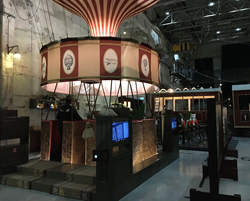

Before the trip home, while waiting for the ship to depart, there was also the opportunity to visit the Tallinn Maritime Museum, located conveniently close in the same direction, which is also a demonstration of Estonian contemporary expertise in its spectacularity. Lennusadam is a maritime museum opened in Tallinn, Estonia, in the spring of 2012. The museum is part of the Estonian Maritime Museum and its name comes from the fact that the maritime museum was also built in the old air harbor “Lennusadam” located in the industrial area of the shore. The museum was originally built in a reinforced concrete hangar built in 1916 as a seaplane hangar. The possibilities of modern technology have also been skillfully used in the implementation of the Maritime Museum, and the exhibition is completely different from the old traditional museum display, where old objects often gather dust in glass cases.
The effectiveness of such modern museum experiences that utilize current technology is part of the overall idea of the DigiYouth project, namely that comprehensive experiencing and doing things provides completely different opportunities for learning experiences, especially since technology enables it to be used even better in combination with traditional learning methods.
Collaboration network
The aim of the DigiYouth project is to develop the entrepreneurial, technological and collaborative skills of young people aged 14–19 in Latvia, Sweden, Finland and Estonia across national borders. 2–5 general education schools and teacher groups from each country, as well as a mentor network, will participate in the project.
Project coordinator: University of Tartu, Estonia
Project partners:
University of Turku, Department of Teacher Education, Rauma Campus (Finland),
Uppsala University, Gotland Campus, Department of Game Design (Sweden),
Merikarvian upper secondary school (Finland),
Rauma Lyseo High School (Finland),
City of Ventspils (Latvia),
Ventspils Youth House (Latvia)
Project budget: EUR 1, of which the European Regional Development Fund (ERDF) contribution is EUR 596.
Project implementation period: 1.1.2018 - 30.4.2021
Funding: The project has been co-financed by the European Regional Development Fund (INTERREG Central Baltic program).
In a nutshell:
- 40 student start-ups will be established, working in collaboration with students from different countries.
- 220 students in four countries will gain experience in collaborative, cross-border start-up activities.
- 45 teachers and mentors will be trained.
- A 1,5-year digital entrepreneurship training program will be developed for educational institutions.