

2013 Iceland
This academic year's internationalization project, as its name suggests, focuses on nature and birds. The project participants are: Merikarvian upper secondary school and co-educational school, Isojoki school triangle, Fjöllbrautaskoli Sellfoss, Bird Life Finland and Bird Life Iceland. There are 34 young people from Finland, of whom 19 are upper secondary school age and 15 are middle school age.
The year-long project includes bird tracking, identification and spotting in both Finland and Iceland. Each participant will do their own part of the project. The project also includes a trip to Iceland in the spring from April 17.4 to April 22.4. The trip has a diverse program, including bird watching, whale watching, tölt, Thingvellir, Gullfoss, Geyshir and meetings with schoolchildren. The travel program with more detailed schedules will be announced during the spring.
The project has been funded by, among others, the Finnish National Board of Education. The deductible is 300 euros. The project's directors and supervisors are: Maria Lankoski, Soile Mattfolk, Säde Vuorela, Pasi Koski and Matti Sillanpää.

Participants
Project participants Merikarvian upper secondary school and co-educational school, Isojoki school triangle, Fjöllbrautaskoli Sellfoss, Bird Life Finland and Bird Life Iceland.
There are 34 young people from Finland participating, of whom 19 are high school students and 15 are middle school students. There are 5 students and a teacher from Isojoki Middle School. MerikarviaThere are 19 students and two teachers from the high school and Merikarvian co-ed school with 10 students and two teachers.
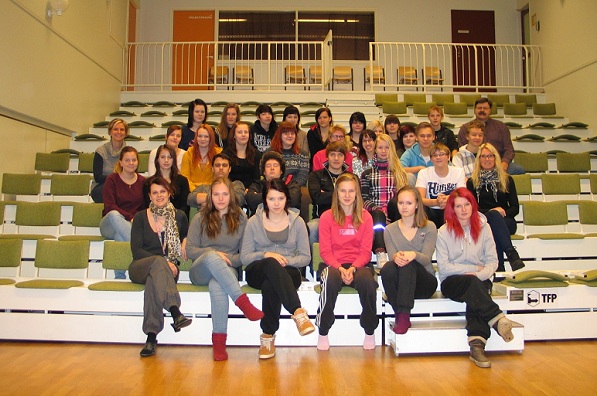
People involved in the project in a group photo Merikarviain the auditorium of the school center. After taking the picture, we went on a birding trip to Pori.
Events
Bird Day in Pori
All participants in the Iceland project and Merikarvialta and Isojoki went on a birding trip to Pori for a whole day as part of the project. We got to know the November birdlife in Reposaari fishing harbour, Preiviikki bay and a field in Pori. The trip was led by our bird expert Matti Sillanpää.
During the day, despite the late autumn, we spotted a large number of waterfowl, gulls and swans. The photos below of a mute swan, great black-backed gull and herring gull taking flight were taken by high school student Teija Järvenpää.


Articles
This is a compilation of group work and articles done during the Iceland project.
Group 1
Group 2
- R2 Gudjunbaldvinsson
- R2 Icelandic political system
- R2 Iceland weather 22.3.2013
- R2 Iceland weather 15.2.2013
- R2 Icelandic Culture, Part 1
- R2 Icelandic Culture, Part 2
- R2 Sports
Group 3
- R3_icelandic_districts
- R3_Icelandic horse
- R3_big_whales
- R3_bald whale
- R3_pyoriainen
- R3_seljalandsfoss
- R3_most common_birds
Study projects
ICELAND PROJECT 2013 – Bird Task no. 1 Result
The first task of the Iceland project 2013 was for the students to determine the common and regular breeding bird species shared by Iceland and western Finland.
To solve the problem, the students had to find out what the breeding bird species in the two areas are, and then find those that are common to both of them. This they solved mainly by using the web.
Browsing the web and finding the relevant web sites made it possible for them to find the breeding bird species of Iceland, and to pick out the common and regular species thereof. The total of common and regular breeding bird species in Iceland was found out to be 74.
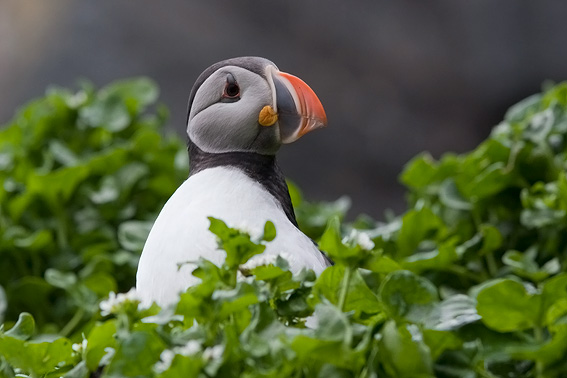
Photo 1. The Puffin (isl. Lundi) is a regular breeder in the Icelandic sea bird colonies, but it has erred in Finland less than 30 times. Photo: Matti Sillanpää
To find the common and regular breeding bird species in western Finland the students were advised to look for those in the area of Pori Ornithological Society (Pori Lintutieteellinn Yhydtis ry), because the breeding species of that particular area are the most thoroughly surveyed on a regular basis. The website of BirdLife Finland guided the students to the website of Finnish Bird Atlas, where they found the breeding species of the relevant area (Satakunta County). Using the criteria given for breeding and regularity, the students picked out the species that fulfilled the criteria. They total 147.
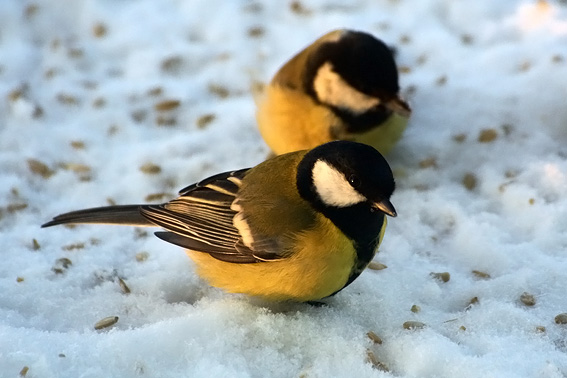
Photo 2. The Great Tit (isl. Flotmeisa = rasvatiainen), a regular breeding bird in Finland, migrates short distances only; this makes it a rarity in Iceland. Photo: Teija Järvenpää
Mapping the common and regular breeding species in western Finland (PLY area), species by species, against those of Iceland gave the students the final list of species that are common and regular in both places. The total of common and regular breeding bird species was found out to be surprisingly small, only 36.
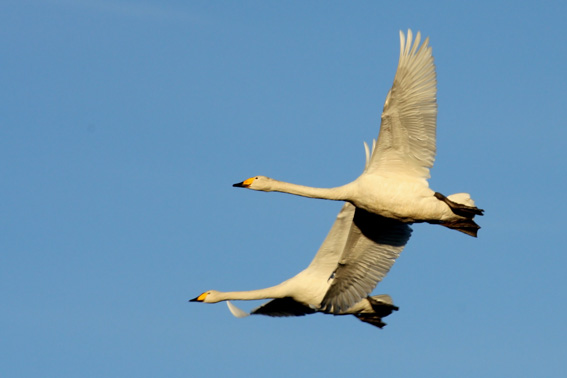
Photo 3. The Whooper Swan (isl. Álft) is one of the common breeders in Finland and in Iceland. The Finnish Whoopers winter in the Straits of Denmark and in the North Sea, whereas their Icelandic cousins migrate to the British Isles. Photo: Teija Järvenpää
ICELAND PROJECT 2013 – Bird Task no. 2
Pihabongaus - Big Garden Bird Watch 2013
As the second task of the study program the Iceland project 2013, the students took part in Pihabongaus, organized by BirdLife Finland since 2006. The model for the event originates in the British "Big Graden watch" organized by Bird Life (Royal Society for the Protection of Birds) for more than 30 years.
More than a hundred thousand birds were observed by the more than 15 people who took part in some 000 Finnish gardens this year. As a result of this event, valuable information is collected on the changes in bird populations, for example.
Taking part in Big Garden Birdwatch was easy. The students watched the Birds in their garden for one hour on the weekend of 26 – 27 January 2013, and recorded the highest number of each bird species they saw at the same time. After the observation hour they sent the information to BirdLife Finland on the net. With this small effort they took a step for nature and helped BirdLife Finland find out more about the Finnish winter garden birds.
In Merikarvia, Siikainen and Isojoki municipalities the students occupied 23 yards and observed a total of 688 bird individuals of 17 species. The most numerous species were Yellowhammer (227 ind.), Great Tit (170 ind.) and House Sparrow (63 ind.).
Table 1. Number and rank of the species observed by Iceland project 2013 students in Big Garden Watch during the weekend of 26-27 January 2013.
| SPECIES | NUMBER | RANK |
| Blackbird | 1 | |
| Blue Tit | 45 | 6 |
| bullfinch | 18 | 8 |
| Coal Tit | 6 | |
| Great Spotted Woodpecker | 5 | |
| Great Tit | 170 | 2 |
| Hazel | 1 | |
| Hooded Crow | 47 | 5 |
| House Sparrow | 63 | 3 |
| jackdaw | 10 | 9 |
| Jay | 4 | |
| magpie | 59 | 4 |
| Redpoll | 21 | 7 |
| Rock Dove | 4 | |
| Tree Sparrow | 5 | |
| Willow Tit | 2 | |
| yellowhammer | 227 | 1 |
| TOTAL | 688 |
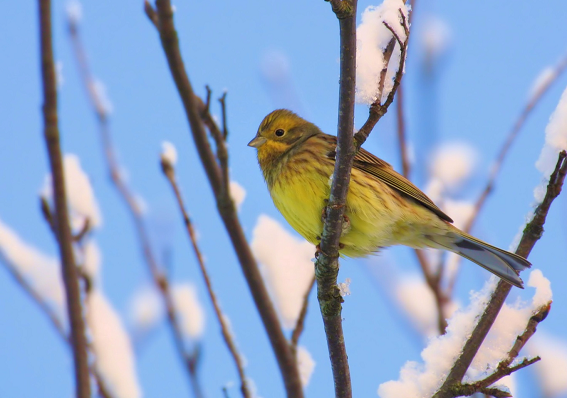
Photo: Yellowhammer.
Travel program
Wednesday 17.4 (Merikarvia – Reykjavik)
The bus leaves from Isojoki Metora at 7.30:8.30 a.m. The start from the high school yard is at XNUMX:XNUMX a.m.
On the way, we will stop in Forssa. We will be at the airport two hours before the flight, which departs at 15.30:15.55 PM. The flight will arrive in Reykjavik at XNUMX:XNUMX PM. We will be met by a bus that will take us from the airport to Hotel Cabin. The bus will be in service all week.
The first day's program includes accommodation, a good dinner, and exploring the surrounding area.
Thursday 18.4
Reykjavik sightseeing tour from 10.00:13.30 AM to XNUMX:XNUMX PM led by a local Finnish-speaking guide.
In the afternoon, visit the Blue Lagoon, where you have about three hours of time.
Friday 19.4
Birding day and a visit to Fjöllbrautaskoli Sellfoss. Full-day program.
Saturday 20.4
The day's program includes whale watching, sea angling and horseback riding. In the evening, Seljalandsfoss.
Sunday 21.4
At Thingvellir, where we see the phenomena caused by the separation of continental plates, in the Geyshir area we see how a hot spring works and the Gullfoss waterfall is an impressive experience for anyone. On the way back we stop at a local greenhouse entrepreneur's shopping center.
Monday 22.4 (Reykjavik – Merikarvia)
Return trip. The flight leaves at 7.30:4.30, so the hotel wake-up call is at 13.55:21.00 in the morning. We land at Helsinki-Vantaa at XNUMX:XNUMX and from there we continue by bus home. The bus will be in Isojoki around XNUMX:XNUMX PM.